98 photos - 46 species
Introduction
There are 65 genera and 500 species,
making it the second largest species in the fish family.
They are lively swimmers, always on the move.
The size varies from 6 cm to 2.30 metres.
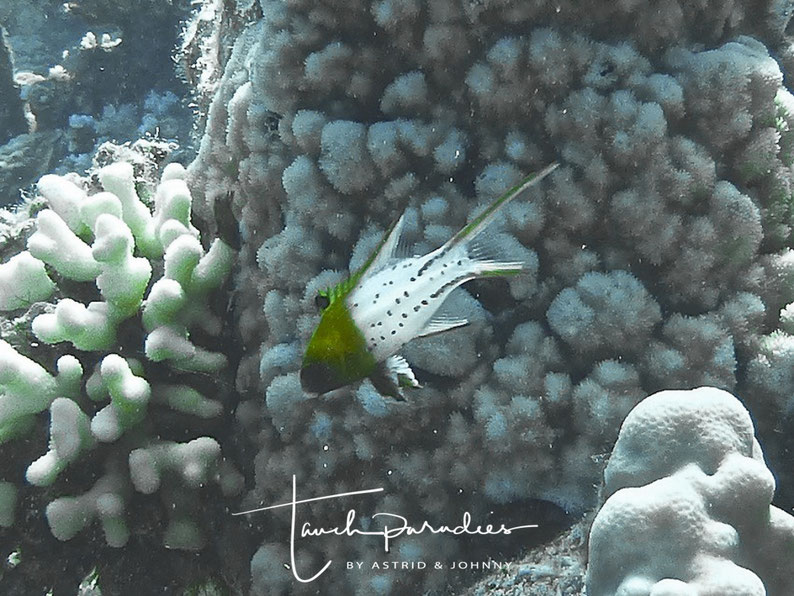
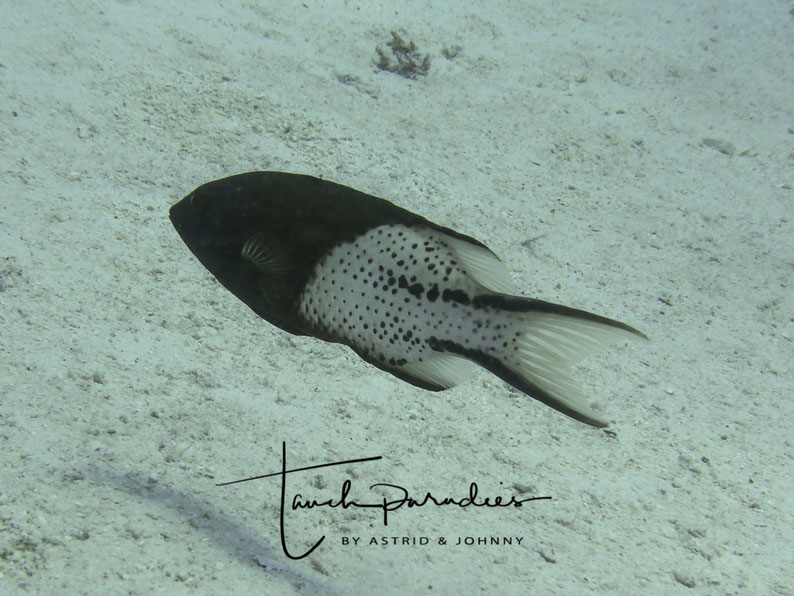
Bodianus anthioides
Lyretail hogfish or Lyretail pigfish
Maximum length: 21 cm
Depth: 3 - 60 m
Anterior body brown, posterior body white with brown spots
and forked tail with 2 brown stripes.
Adults often live in bays, lagoons and on outer reefs,
while juveniles live around black corals and gorgonians.
Mullets are frequent companions.
Hurghada Egypt
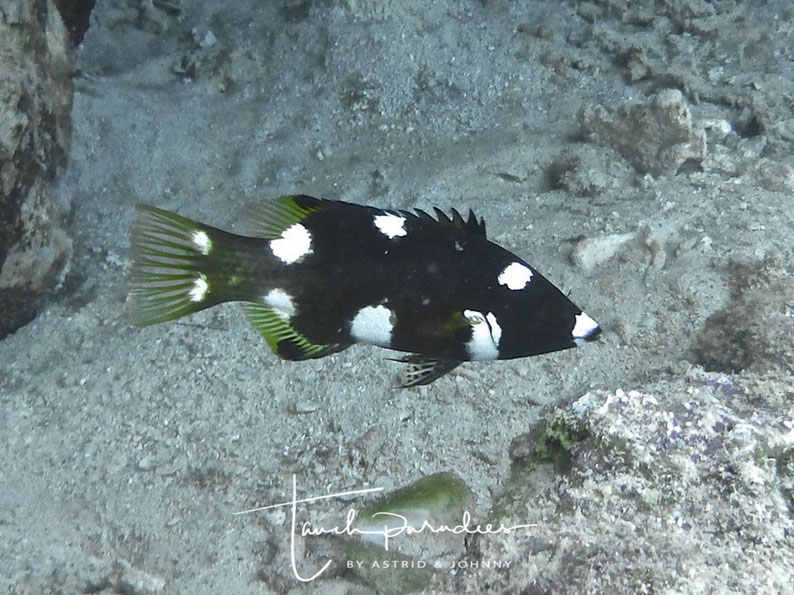
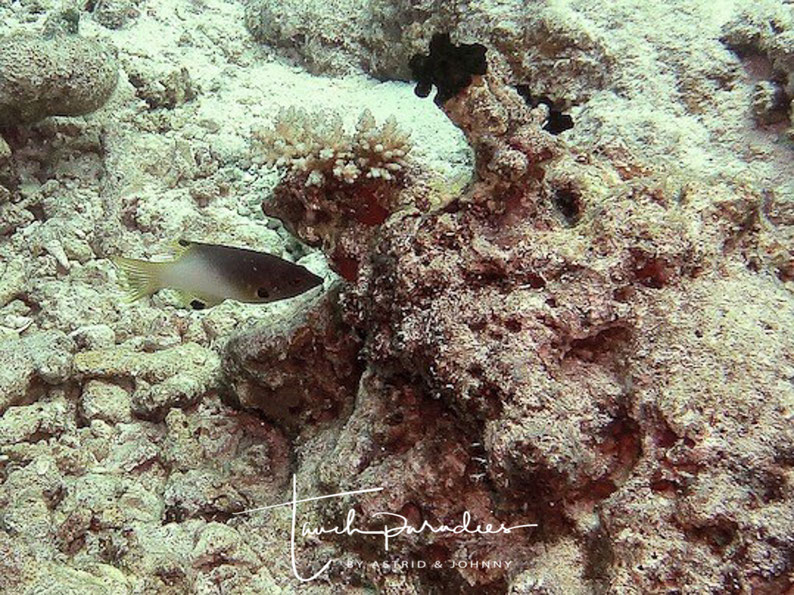
Bodianus axillaris
Axilspot hogfish, Coral pigfish or Turncoat hogfish

Maximum length: 20 cm
Depth: 2 - 40 m
Solitary in coral-rich reefs.
Hurghada Egypt
Bodianus diana
Diana's hogfish
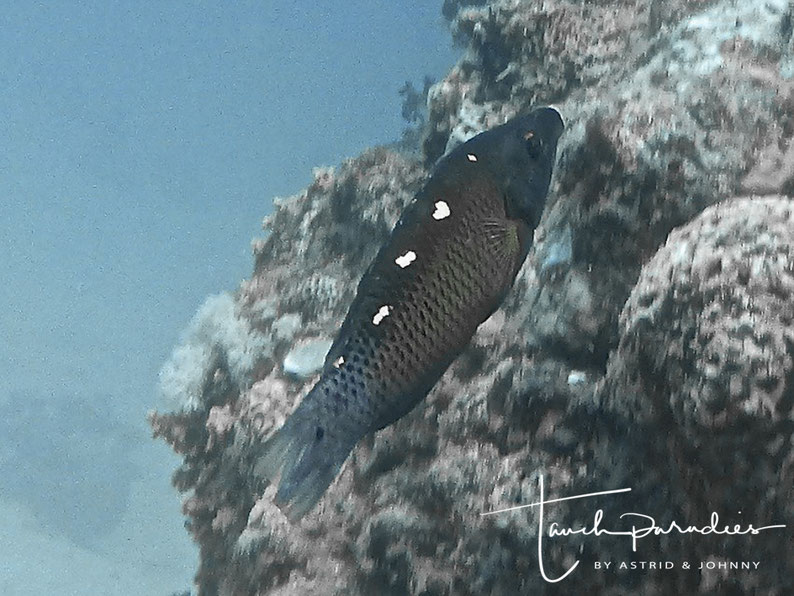
Maximum length: 25 cm
Depth: 3 - 50 m
Brown body with 4 - 5 white dorsal spots.
Often found on coral-rich, steep slopes.
Hurghada Egypt
Bodianus dictynna
Redfin hogfish
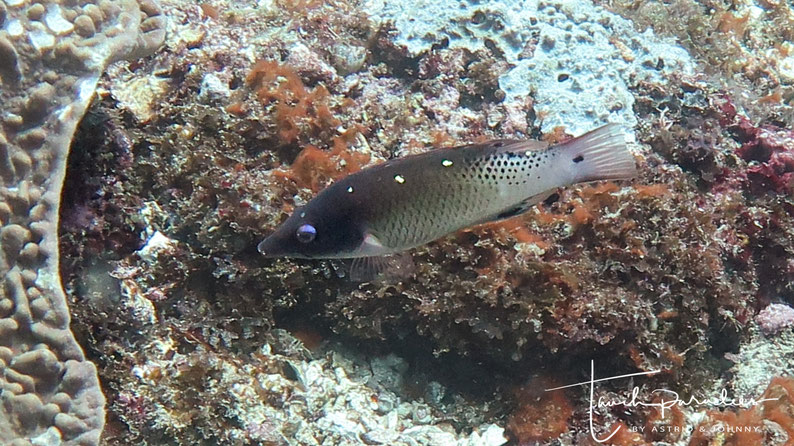
Maximum length: 14 cm
Depth: 9 - 30 m
Juvenile wrasses of this species are active cleaners,
by removing skin parasites from other fish.
When they are not busy with cleaning work,
they seek shelter in black corals, gorgonians and reef caves.
Adults specifically seek out reefs with populations of live coral,
where they search for molluscs and various crustaceans.
The juveniles are brown with a few white spots on the head
which are sparse and usually large, often forming irregular stripes under and behind the eye.
often join together to form irregular stripes.
Males have a large, distinctive black spot on the back of the dorsal fin,
also in the middle of the anal and pelvic fins.
Similar to Bodianus diana
Bangka island North Sulawesi
Bodianus mesothorax
Split-level hogfish, Blackbelt hogfish, Black-belt hogfish,
Coral hogfish, Eclipse hogfish, Eclipse pigfish, Mesothorax hogfish
or Yellow-spotted hogfish
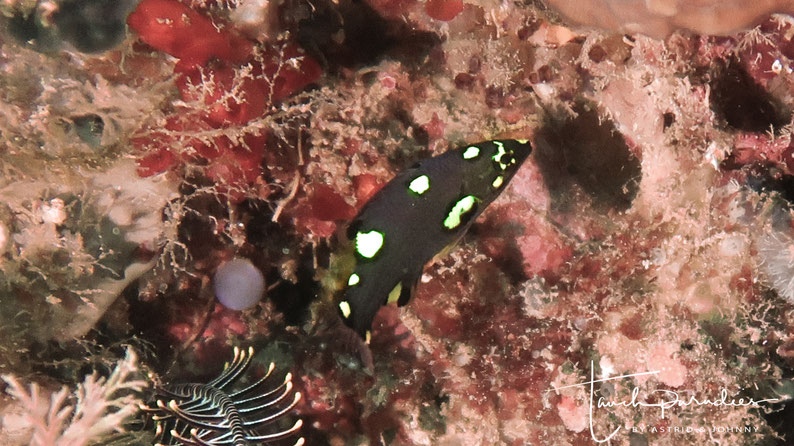
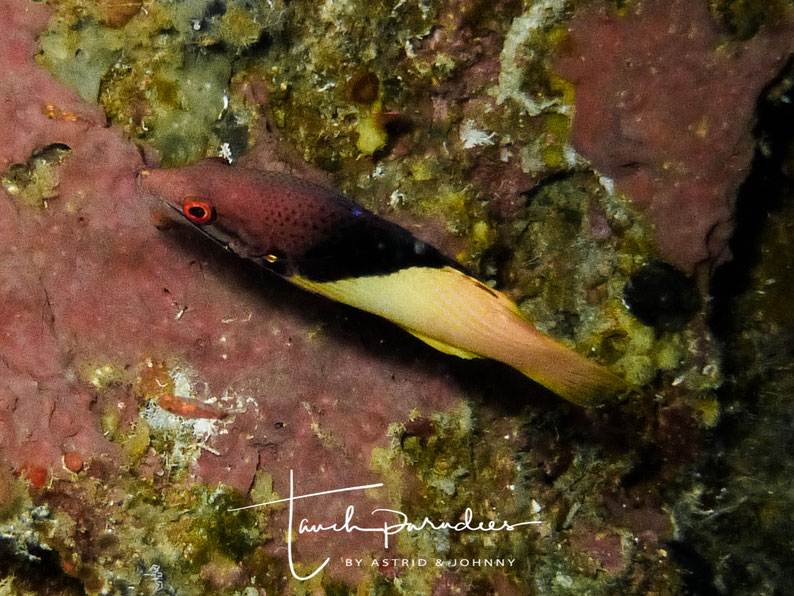

Maximum length: 20 cm
Depth: 5 - 30 m
Black band on the front body.
Prefers coral-rich outer reef slopes.
Photo 1 ( Juvenile ): Bangka island North Sulawesi
Photos 2 - 3: Moalboal Philippines
Bodianus rufus
Spanish hogfish
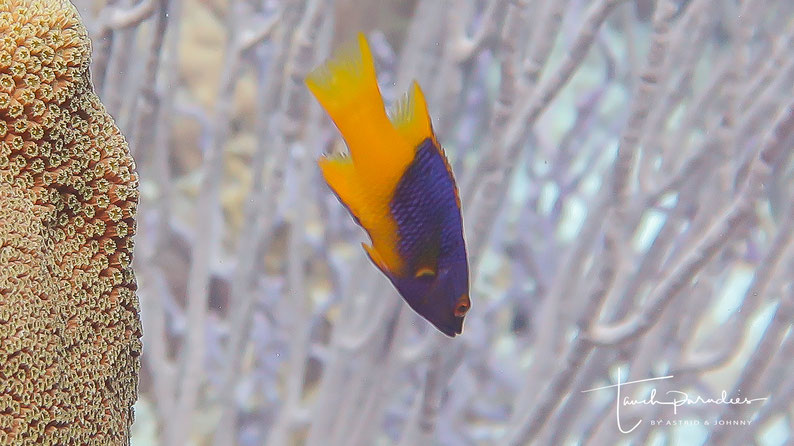
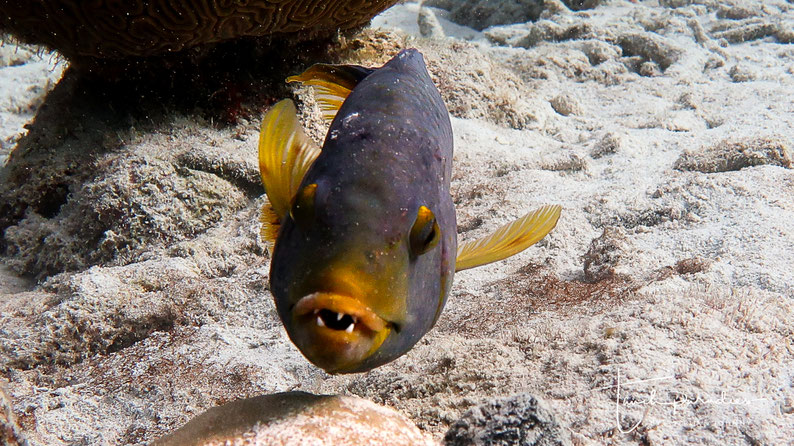
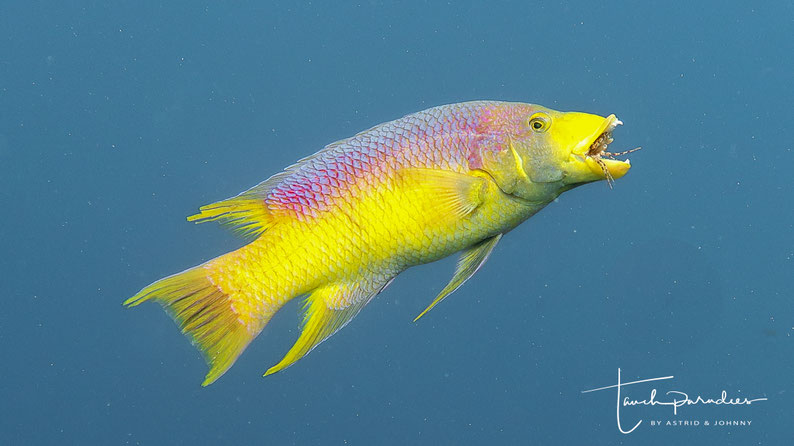

Maximum length: 60 cm
Depth: 3 - 35 m
Upper part of the body is purple at the front, belly and tail are golden yellow.
Swims continuously around the reef.
Not shy, allows a close approach.
Bonaire Caribbean
Cheilinus abudjubbe
Abudjubbe wrasse
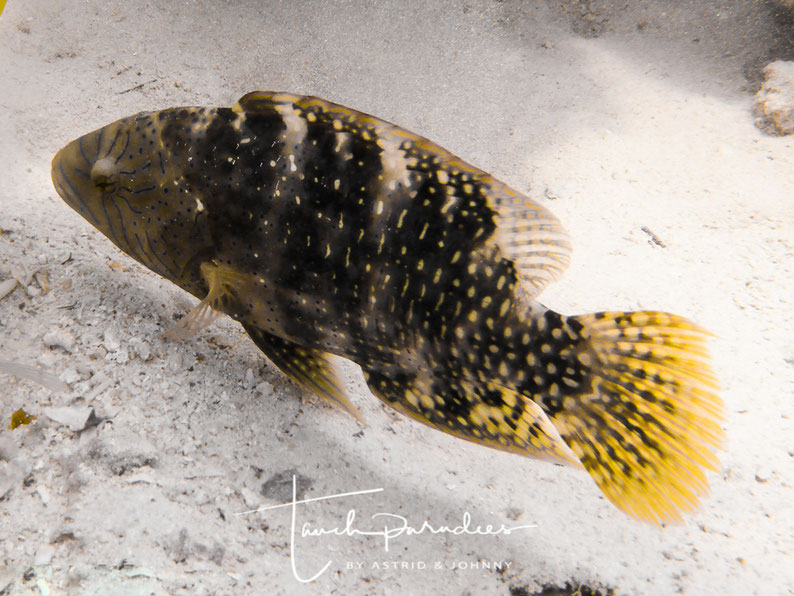
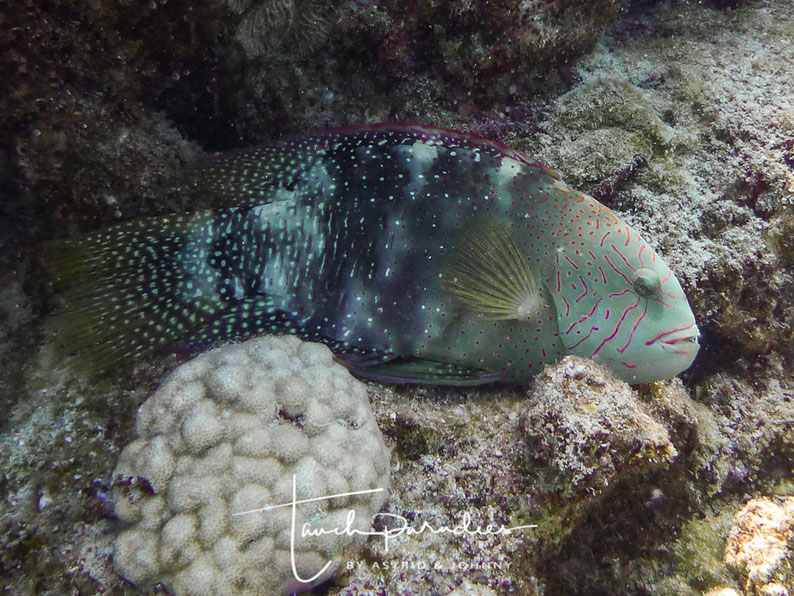
Maximum length: 40 cm
Depth: 2 - 30 m
Lives in coral-rich areas with rubble, sand and algae.
Solitary and very vigilant.
Hurghada Egypt
Cheilinus chlorourus
Floral wrasse
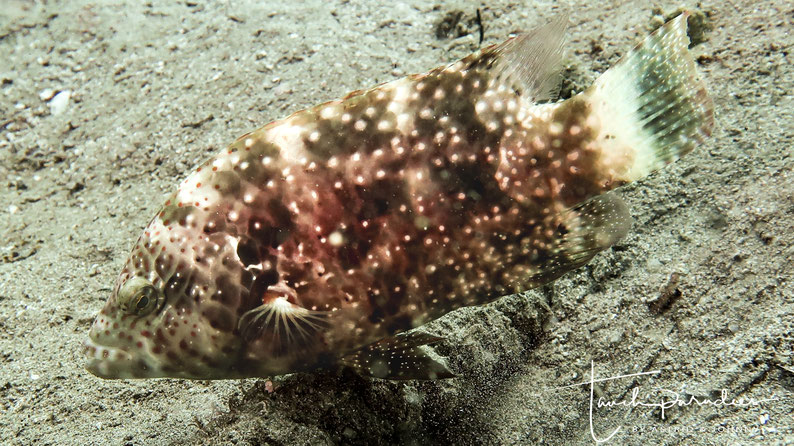
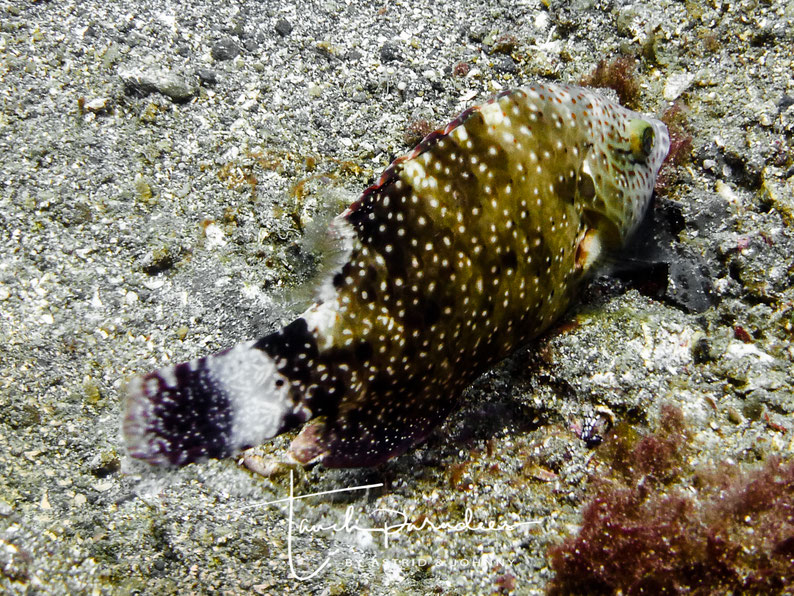
Maximum length: 36 cm
Depth: 2 - 30 m
Very variable colouration, can vary from green with red areas
to light grey-brownish, usually with small white dots
arranged in longitudinal rows and white spots on the back.
Photo 1: Bangka Island North Sulawesi
Photo 2: Lembeh Strait North Sulawesi
Cheilinus fasciatus
Red-breasted wrasse


Maximum length: 36 cm
Depth: 5 - 40 m
Not very shy.
It resembles a grouper in its bulky shape.
The basic colour is whitish with grey, vertical bands.
Large adult specimens have bright red zones on the chest, behind the gill covers and on the fins.
Inhabits lagoons, bays and outer reefs.
Foto 1: Bangka island North Sulawesi
Foto 2: Hurghada Egypt
Cheilinus lunulatus
Broomtail wrasse
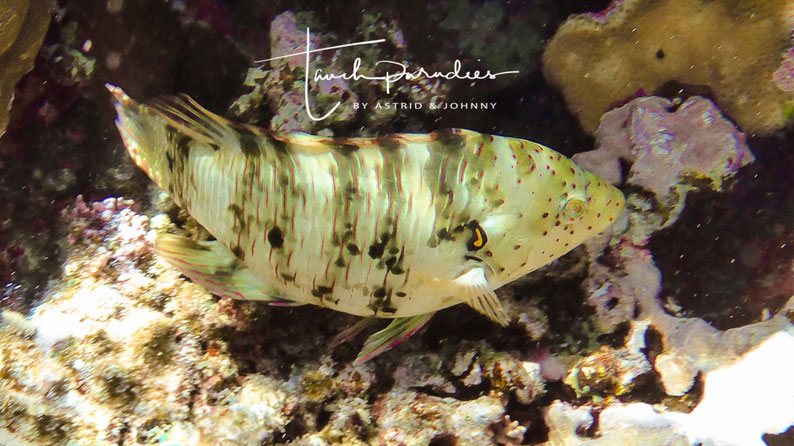


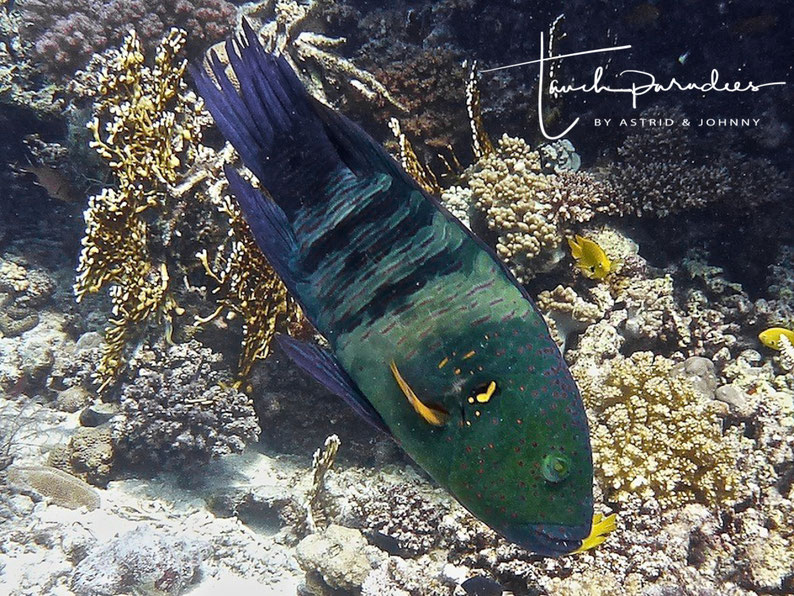
Maximum length: 50 cm
Depth: 0.5 - 30 m
It has a green body, a blue "broom tail", a yellow pectoral fin and a yellow spot on the gill cover.
It likes to swim alone along reef edges with deep caves and patches of sand or rubble.
Vigilant.
Photos 1 - 2 Female: El Qesir Egypt
Photo 3 + 4 Male: Hurghada Egypt
Cheilinus trilobatus
Tripletail wrasse
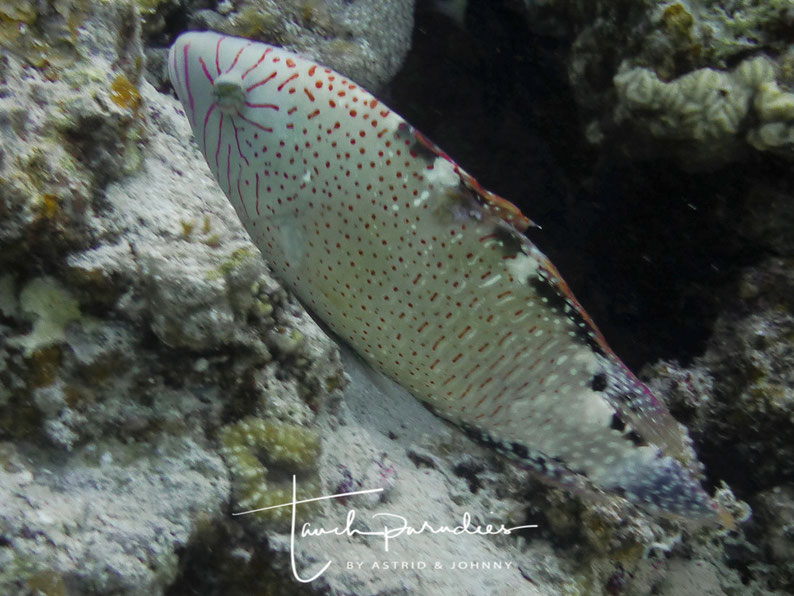
Maximum length: 35 cm
Depth: 1 - 30 metres
A large and fairly common wrasse.
In areas where divers and snorkellers are more frequent, this rather solitary species is not very shy.
Embudu Maldives
Cheilinus undulatus
Humphead wrasse, Maori wrasse, Napoleon wrasse or Napoleon fish
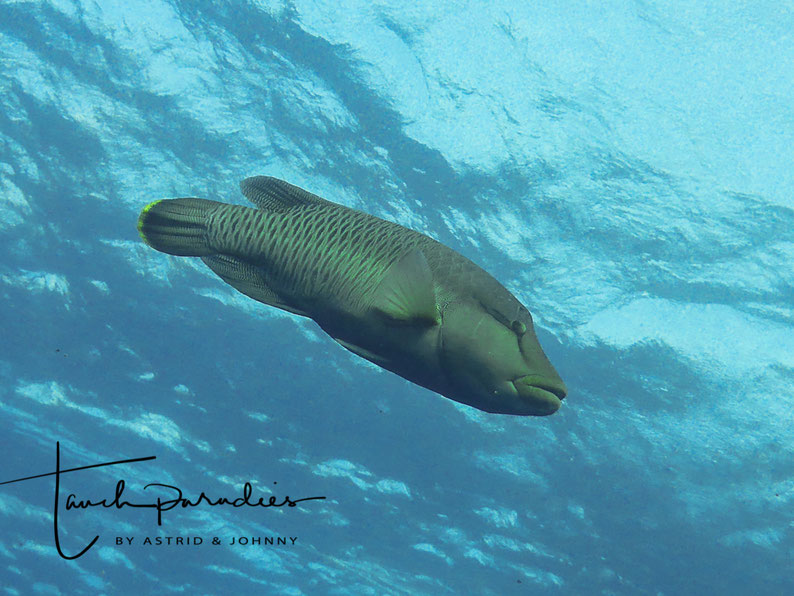
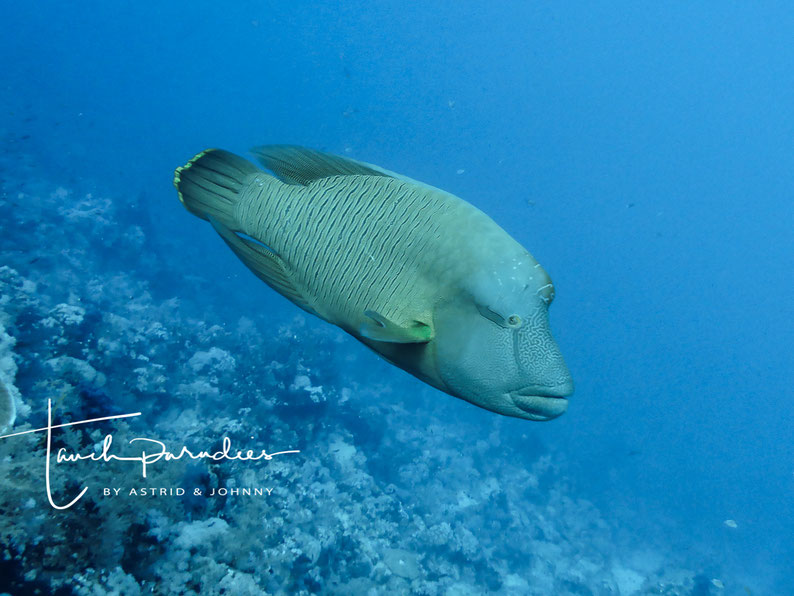
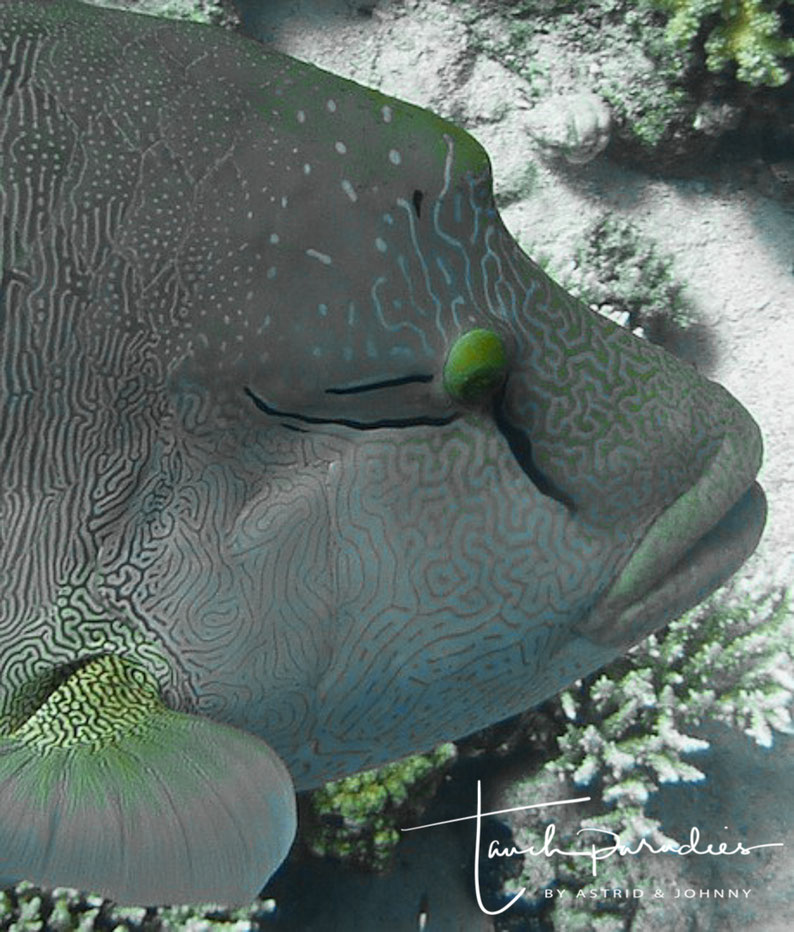
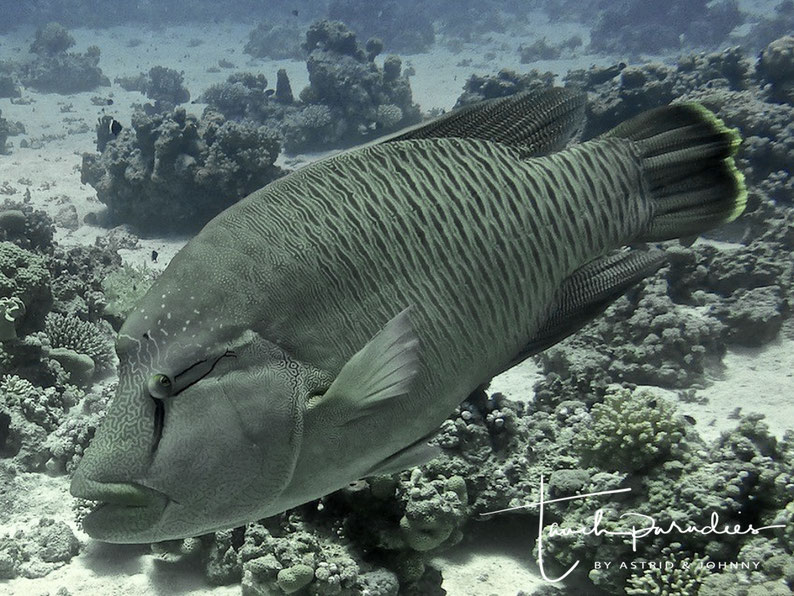
Maximum length: 2.30 m
Depth: 1 - 60 m
Adults with strong frontal hump, juveniles with two black eye stripes.
Shy.
Populations in sharp decline in the Indo-Pacific
due to unscrupulous cyanide fishing for Southeast Asian restaurants with live fish.
Photos 1 - 2: Big + Little Brother Egypt
Photos 3 - 4: Embudu Maldives
Cheilio inermis
Cigar wrasse
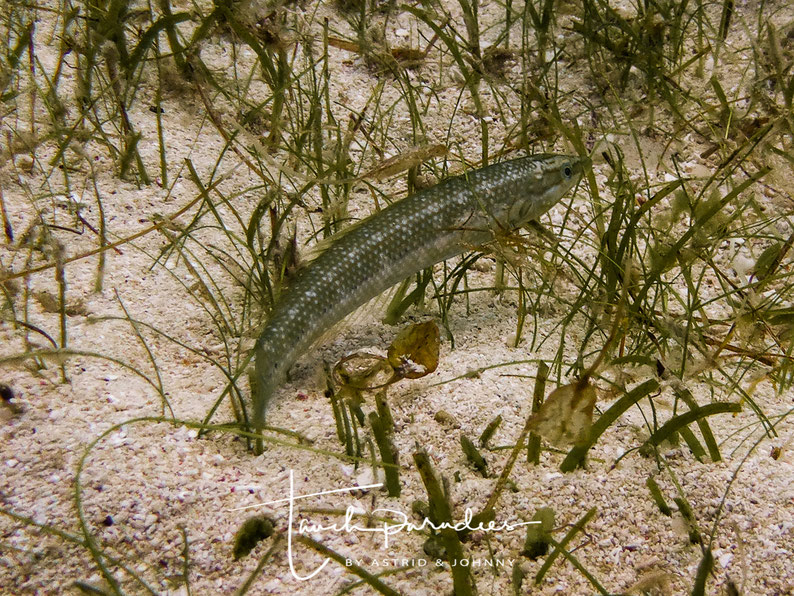
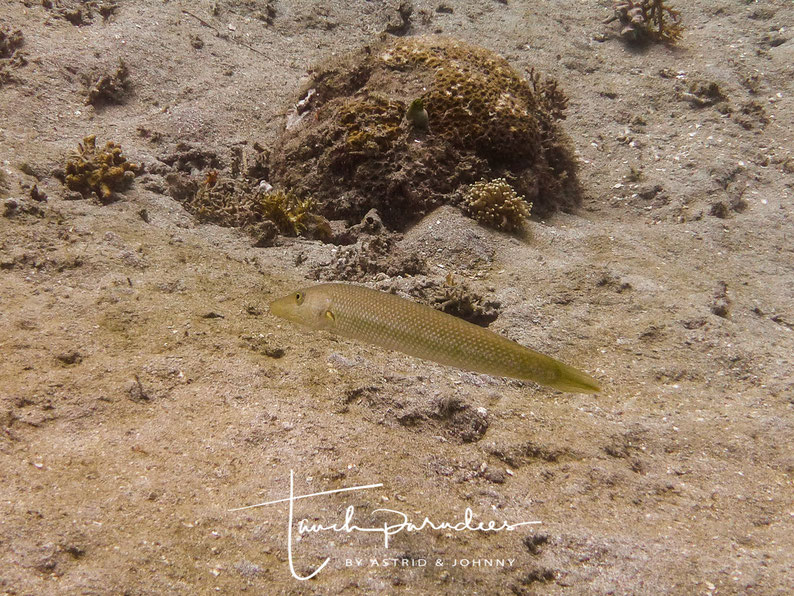
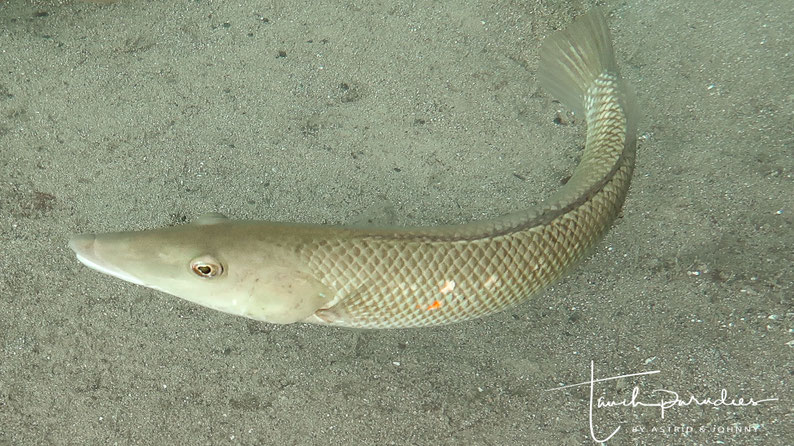
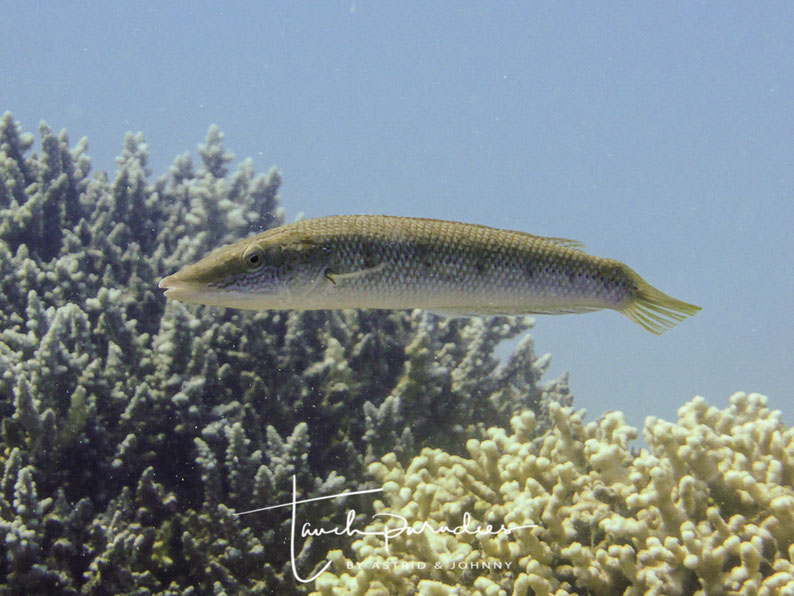
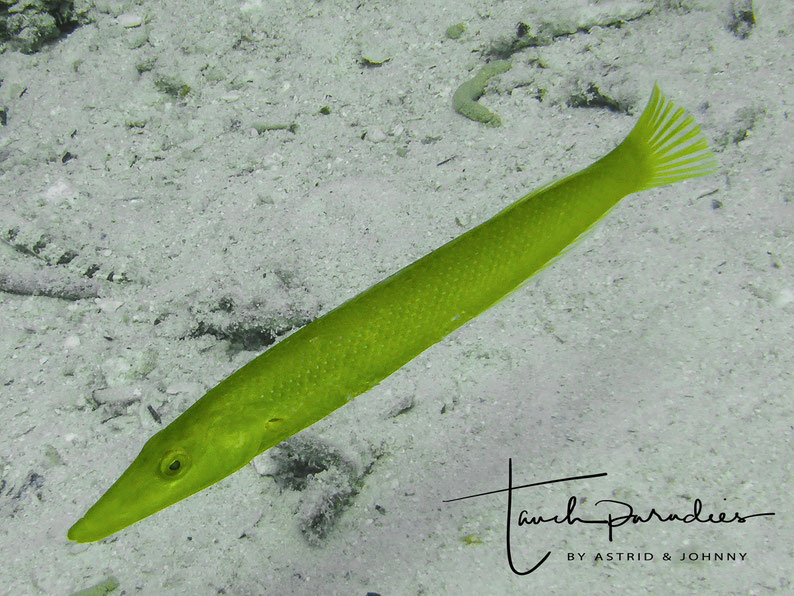

Maximum length: 50 cm
Depth: 1 - 35 m
Colour Variable from green, brown to yellow.
Shy loner.
Accompanies mullets and other wrasses and waits for prey to be exposed.
Photo 1: Moalboal Philippines
Photo 2: Lembeh Strait North Sulawesi
Photo 3: Bangka island Nord Sulawesi
Photos 4 - 6: Hurghada Egypt
Cirrhilabrus exquisitus
Exquisite wrasse


Maximum length: 11 cm
Depth: 2 - 32 m
The photos show a young female, males are much more colorful.
Bangka island North Sulawesi
Cirrhilabrus lubbocki
Lubbock's wrasse
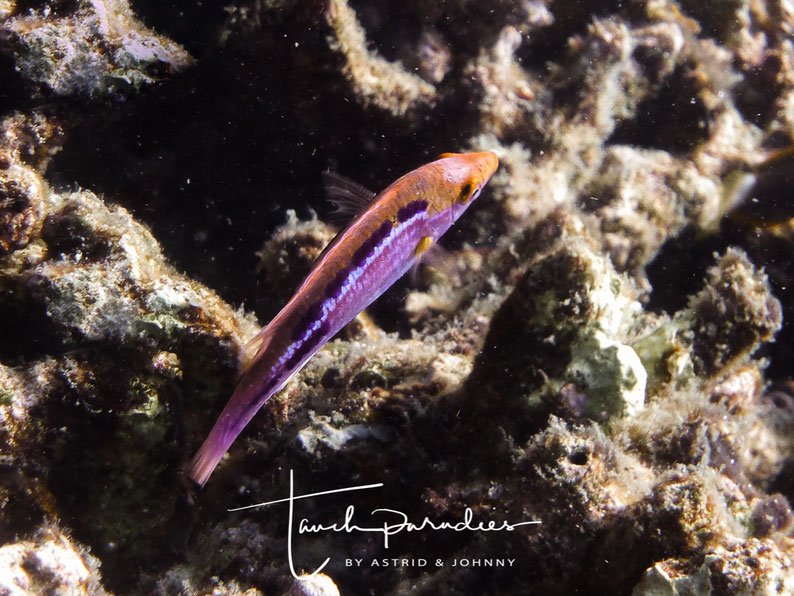
Maximum length: 8 cm
Depth: 3 - 35 m
Yellow pectoral fin.
Over corals and rubble on outer reefs.
Travelling singly or in loose groups, snapping at zooplankton.
Moalboal Philippines
Cirrhilabrus ryukyuensis
Yellowflanked fairy wrasse, Blueside wrasse, Ryukyu fairywrasse
Purple yellow spot dwarf parrot
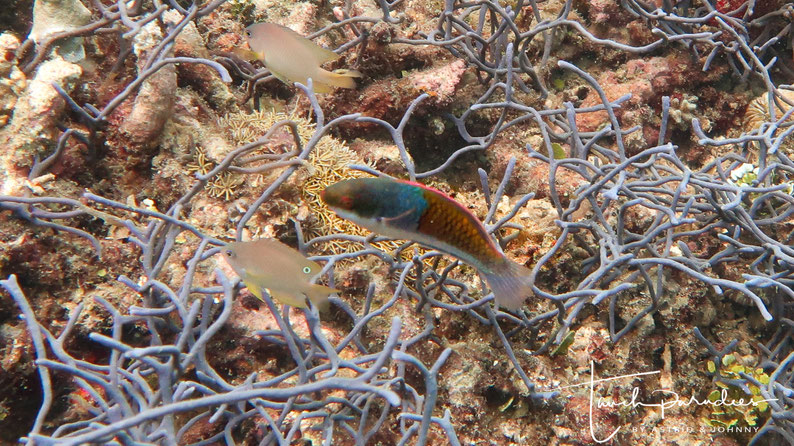
Maximum length: 10 - 11 cm
Depth: 2 - 25 m
The German name “ Gelbfleck Zwerglippfisch ” comes from a yellow spot,
which the animals have in the terminal phase,
It is found directly behind the base of the pectoral fin,
it has a “ triangle-like ” shape.
This name is also used for the dwarf wrasse Cirrhilabrus cyanopleura,
which also has a yellow spot in the terminal phase,
but differs from Cirrhilabrus ryukyuensis in its overall appearance.
Bangka island North Sulawesi
Clepticus parrae
Creole wrasse
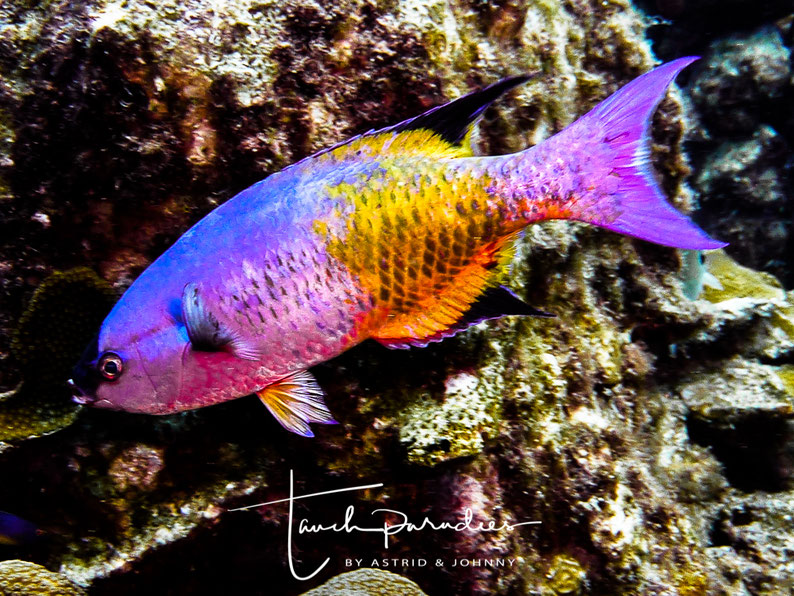

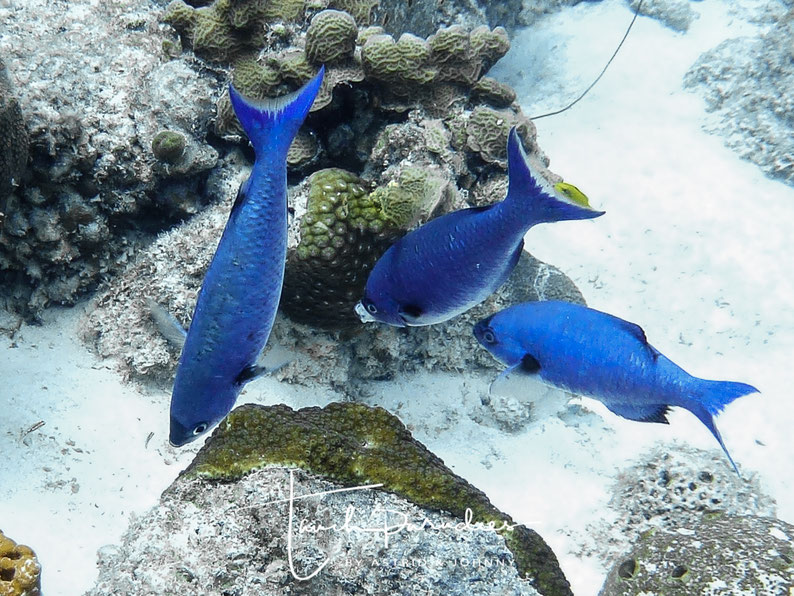
Maximum length: 30 cm
Depth: 10 - 25 metres
Older fish develop a yellow to reddish area in the lower part of the hind body.
The juvenile form has a longitudinal row of spots
on the back consisting of light and dark dots.
The initial phase is dark purple to lavender in colour.
Forms schools along the reef.
Not shy, ignores divers.
Bonaire Caribbean
Coris batuensis
Batu coris
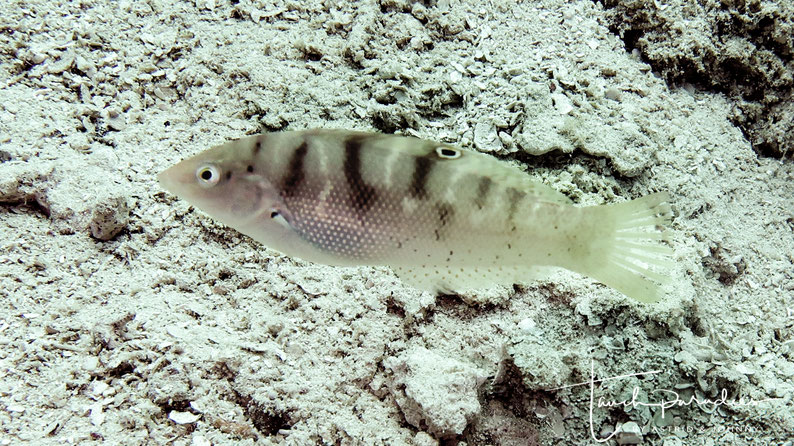
Maximum length: 16 - 17 cm
Depth: 2 - 30 m
Greenish with pinkish markings on a dark background.
Very pale on a white sandy bottom, large males lack the dorsal spots.
Adults are found in reefs and clear lagoons up to a depth of 15 m,
up to 30 m in sand and rubble bottoms.
Food: Snails and crabs
Bangka island North Sulawesi
Cymolutes torquatus
Finescale razorfish, Razor wrasse or Collared knifefish
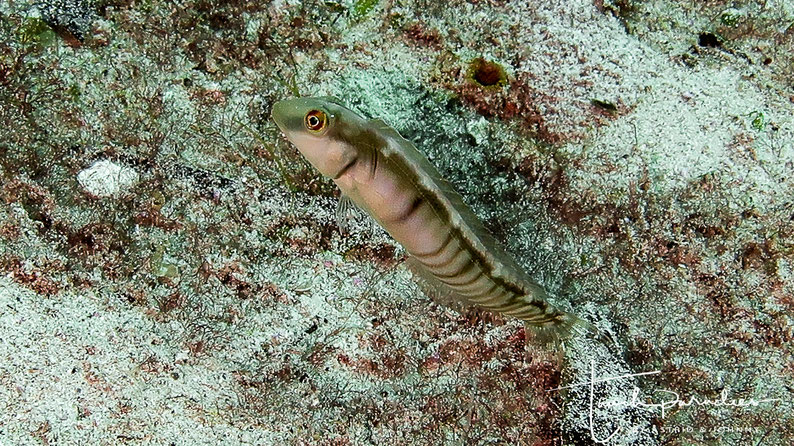
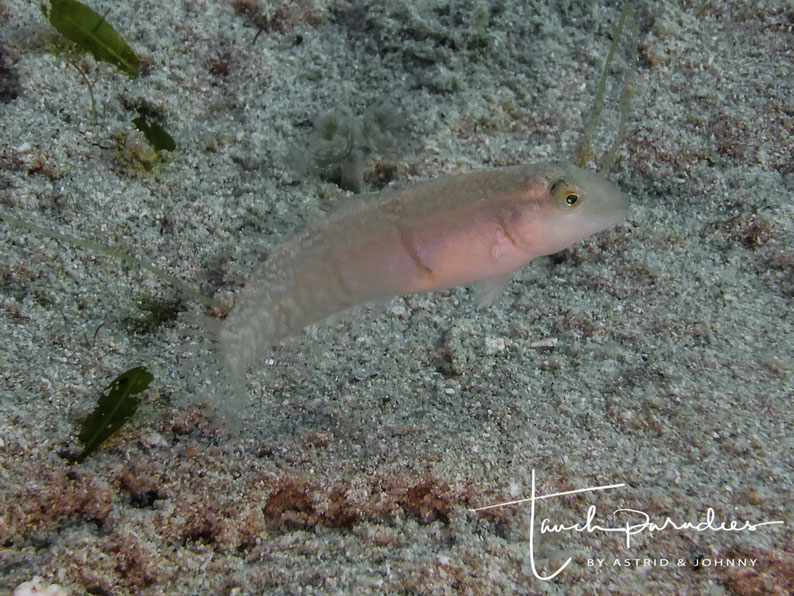
Maximum length: 20 cm
Depth: 3 - 25 m
Solitary, mostly found on sandy bottoms and shallow lagoons.
Bangka Island North Sulawesi
Epibulus insidiator
Sling-jaw wrasse
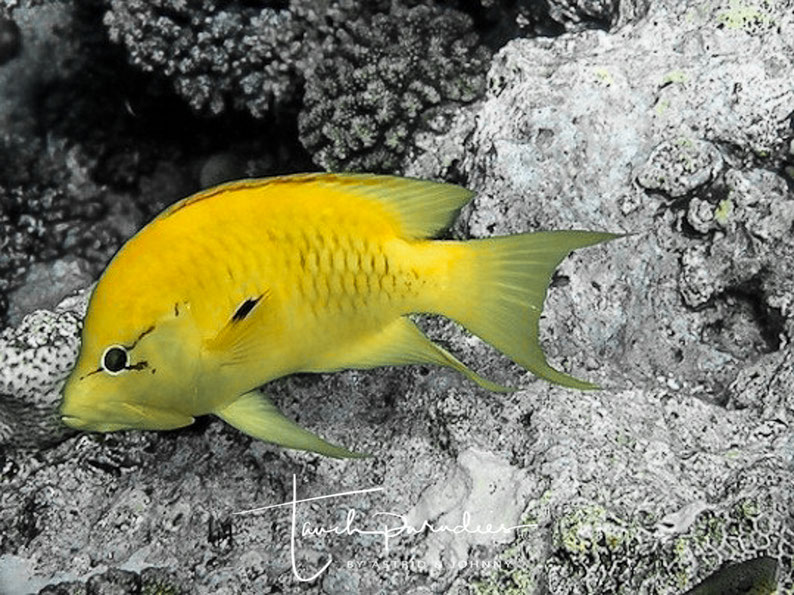
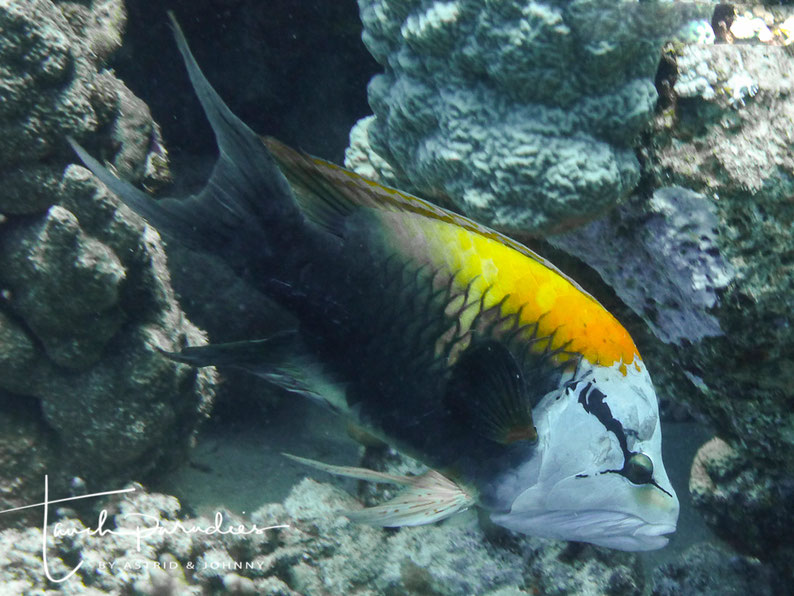

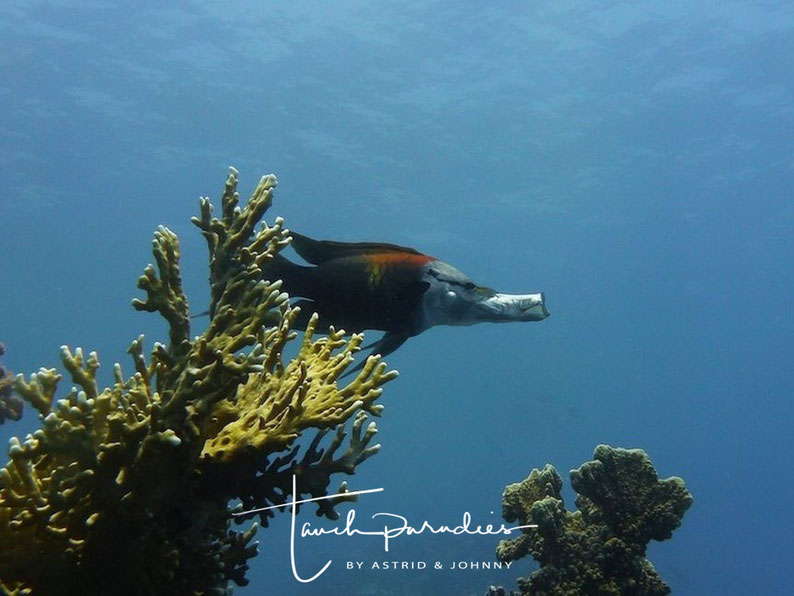
Maximum length: 35 cm
Depth: 1 - 30 m
Lives in coral-rich lagoons.
Eats small shrimps, crabs and fish living in corals,
which it sucks in at lightning speed with its mouth.
Inverted mouth extended in photo 4
Hurghada Egypt
Gomphosus caeruleus
Green birdmouth wrasse
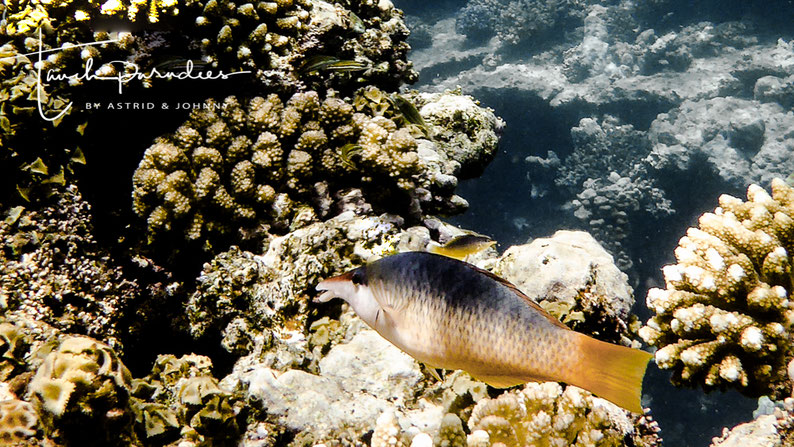
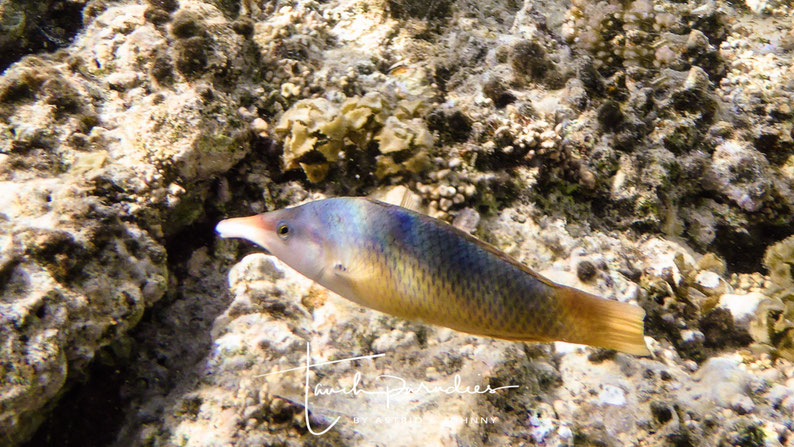

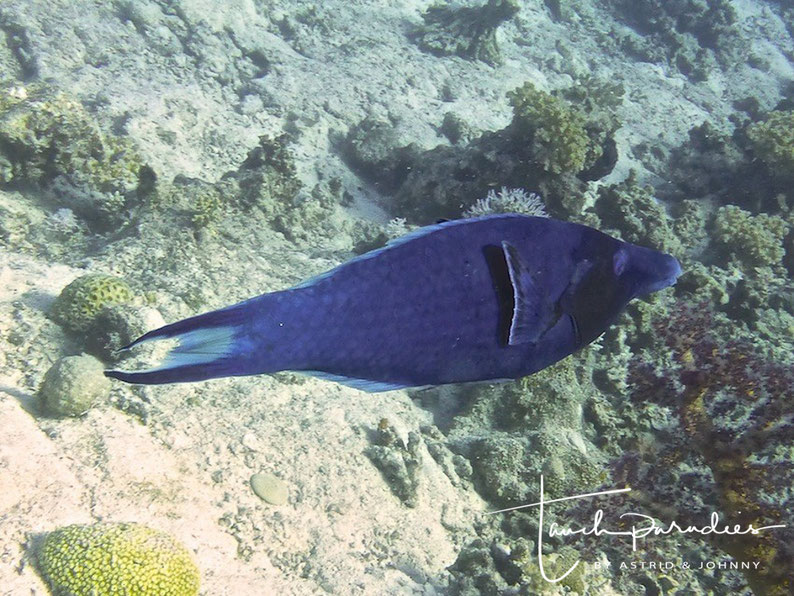
Maximum length: 28 cm
Depth: 1 - 30 m
Females yellow with white lower body, upper body blue-black.
Males completely blue.
They have a long snout and live in lagoons, bays and outer reefs,
with the males travelling alone and the females in small harem groups.
They use their long snout to get invertebrates out of cracks.
Photos 1 - 3: El Qesir Egypt
Photo 4: Hurghada Egypt
Halichoeres chrysus
Canary wrasse, Golden rainbow fish, Golden wrasse, Yellow wrasse

Maximum length: 12 - 14 cm
Depth: - 30 m
It has a thin, elongated body with a terminal mouth.
The body coloration is bright yellow, with some variations depending on age.
Young and immature females have two black,
white or light yellow spots on the dorsal fin,
(the first at the beginning of the fin and the second in the middle of the dorsal fin)
and a third between the caudal peduncle and the beginning of the caudal fin.
Adult females or young males
only show the two black spots on the dorsal fin.
Adult males only show the first black spot
on the front of the dorsal fin,
a lighter spot directly behind the eye and irregular green to pink lines
greenish to pinkish lines on the face.
The canary wrasse is widespread in the tropical and subtropical waters of the central
waters of the central Indo-Pacific, in an area that extends from the
from the Christmas Islands and Indonesia, Japan, New South Wales
and the Rowley Shoals as well as the Tonga and Solomon Islands.
Bangka island North Sulawesi
Halichoeres leucurus
Reyhead wrasse, Chainline wrasse, Sand-reef wrasse or Silty wrasse
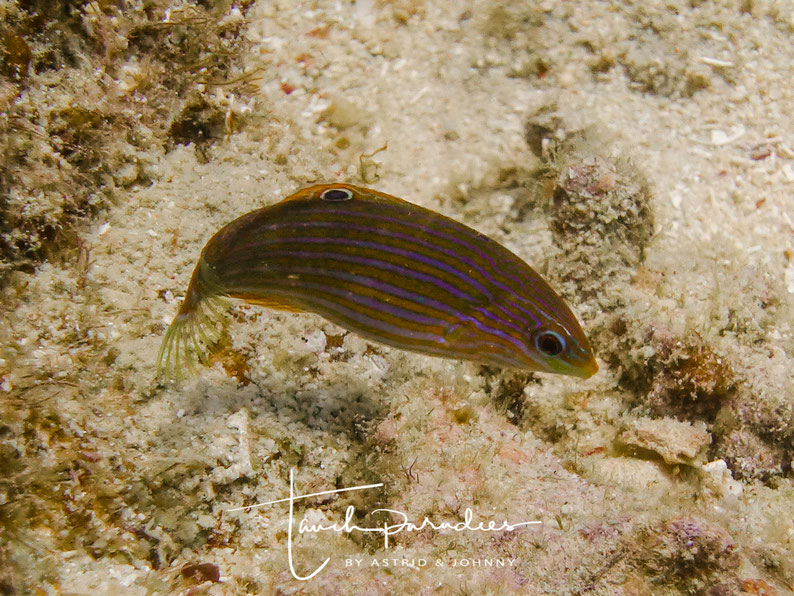

Maximum length: 13 cm
Depth: 5 - 20 m
Favour sandy areas, burrow into them to sleep.
Always swimming, very difficult to photograph.
Photos 1 - 2: Moalboal Philippines
Halichoeres zeylonicus
Ceylon wrasse, Goldstripe wrasse, Sri lankan wrasse
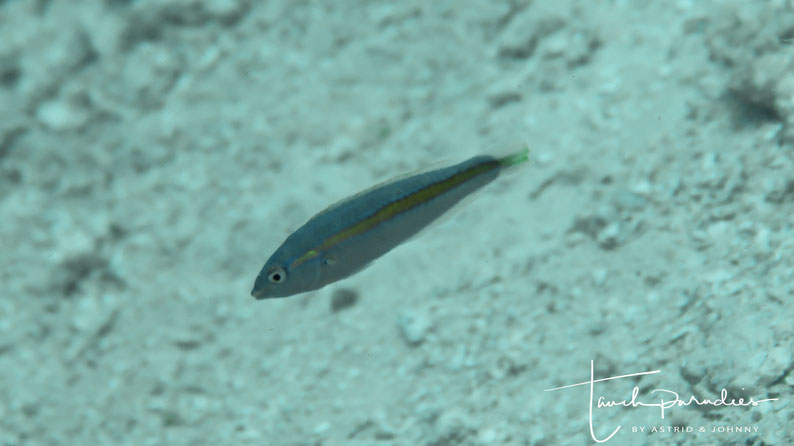
Maximum length: 20 cm
Depth: 10 - 65 m
This juvenile fish already shows its typical golden stripes.
This wrasse is usually found below 35 m,
usually in a small group of females with a patrolling male.
A permanent swimmer, it buries itself in the sandy bottom at night.
Food: bristle worms.
Bangka island North Sulawesi
Hemigymnus fasciatus
Barred Thicklip wrasse
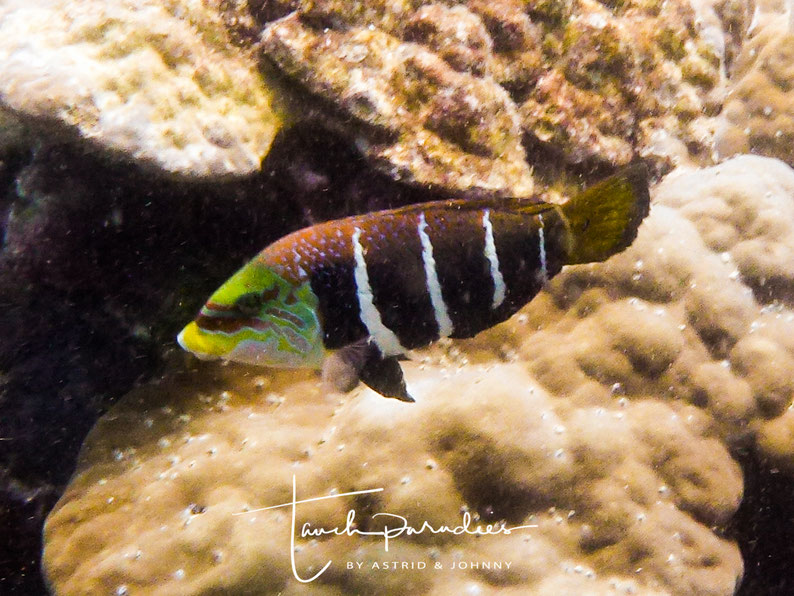
Maximum length: 50 cm
Depth: 2 - 30 metres
In comparison to other Junker Wrasses, they have a bulky, high-backed body and a large head.
They are unmistakably black and white in colour, with a pattern of vertical stripes.
They generally live as solitary animals, mostly on rocks or rubble at the edge of coral reefs.
Photo 1: Moalboal Philippines
Hemigymnus melapterus
Blackeye thicklip wrasse or Half-and-half wrasse
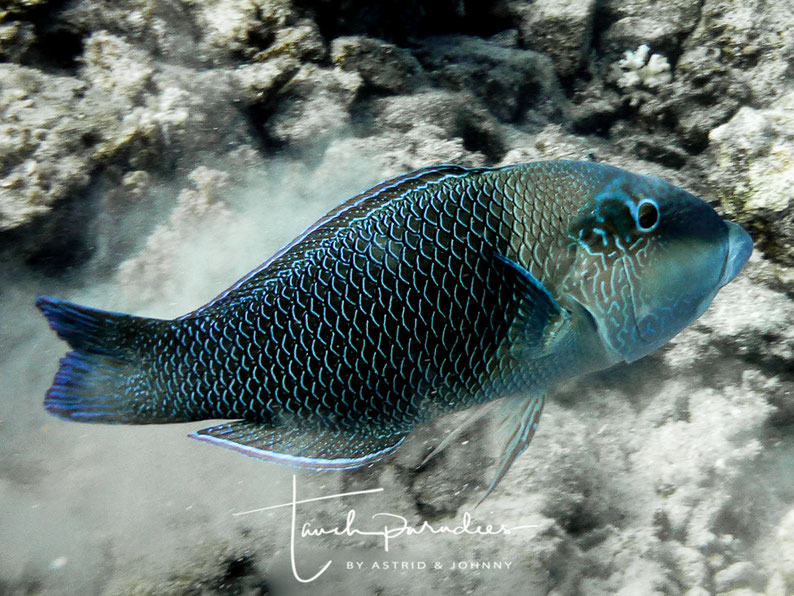
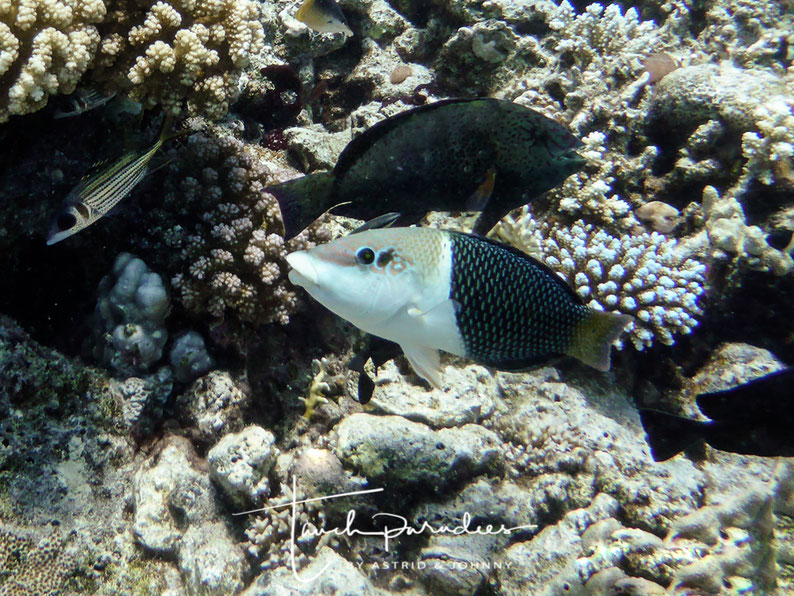
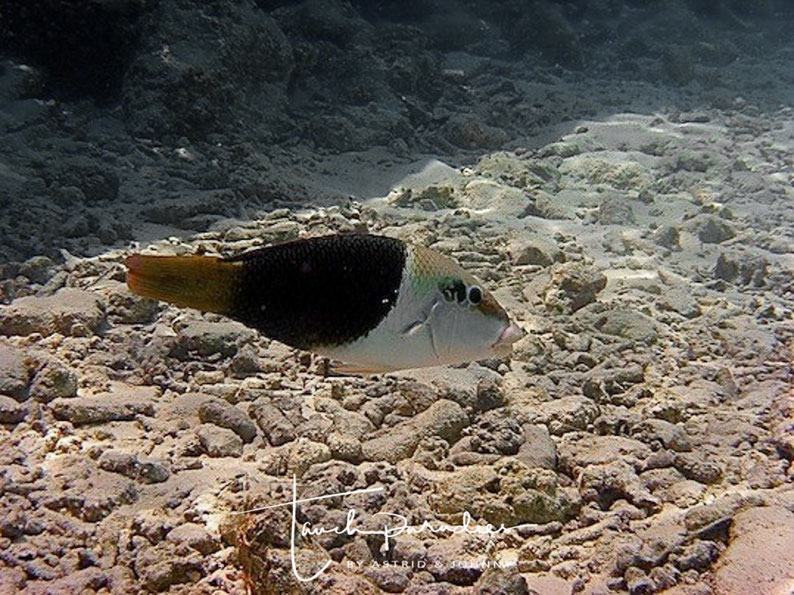
Maximum length: 50 cm
Depth: 1 - 30 m
Adults are olive green.
Shy loners.
Juveniles between corals and rubble.
Eats invertebrates, especially hard shellfish, excreting the remains as a * sand cloud *.
Photo 1 ( Adult ): Hurghada Egypt
Photos 2 - 3 ( juvenile ): El Quesir Egypt
Hemigymnus sexfasciatus
Red sea thicklip wrasse
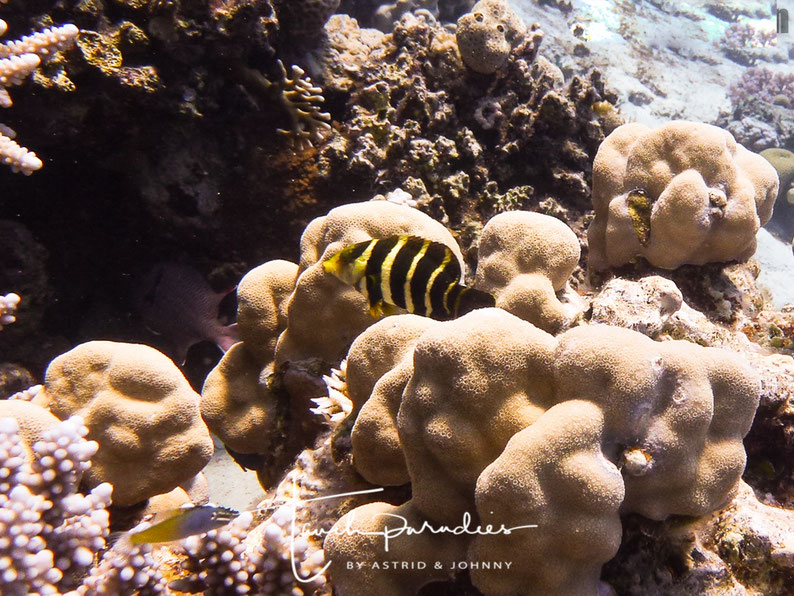


Maximum length: 50 cm
Depth: 1 - 20 m
White body with 5 broad and dark transverse bands.
Rarely encountered and shy loner.
Ingests sand to filter out invertebrates.
Hurghada Egypt
Hologymnosus annulatus
Ring wrasse or Ringed slender wrasse
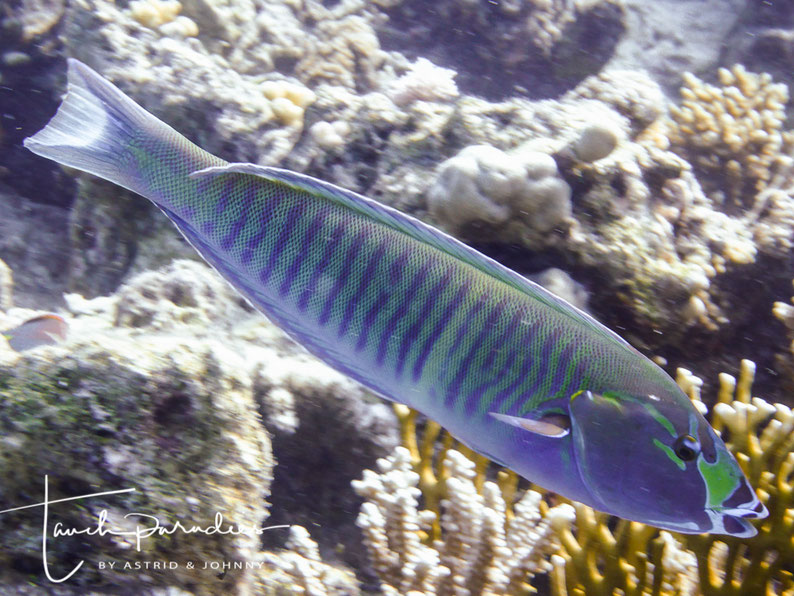
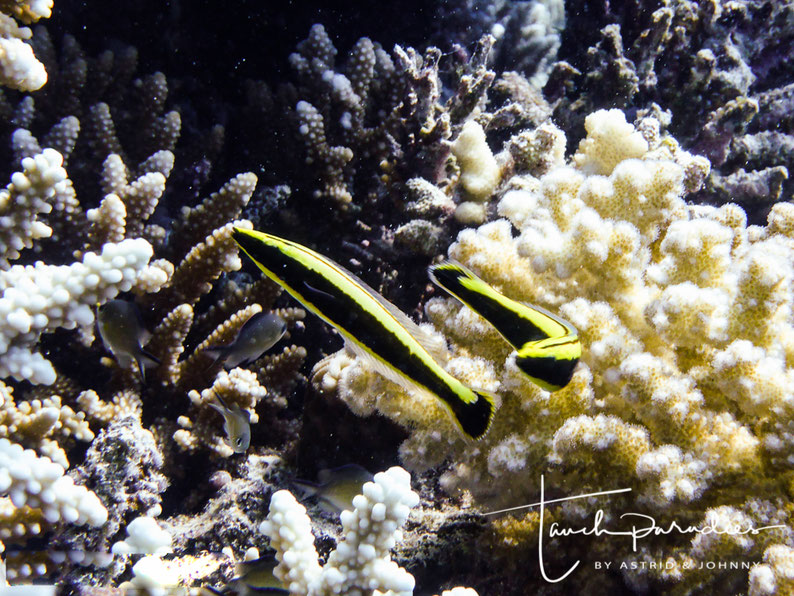

Maximum length: 40 cm
Depth: 5 - 35 m
Photos 2 - 3 show juveniles.
Always near the bottom, mimicking young bluehead tilefish.
Adult males are green with blue stripes, while females are brown with dark stripes.
Hurghada Egypt
Hologymnosus doliatus
Pastel ringwrasse, Candycane, Candy cane wrasse, Longface wrasse, Narrow banded wrasse, Ringed rainbowfish, Ringed wrasse

Maximum length: 35 - 50 cm
Depth: 1 - 35 m
Juvenile.
The males are bluish-green to pale reddish with lavender-colored stripes,
a light band on the back of the pectoral fin and orange lines on the head.
The females are bluish, greenish or grayish,
with 20 - 23 orange stripes on the flanks
and a blue-black spot on the rear edge of the gill cover.
The juveniles are whitish and have three thin orange-red stripes.
Bangka island North Sulawesi
Iniistius aneitensis
Yellowblotch razorfish, Pale razorfish, White-blotch razor wrasse, Whitepatch razorfish
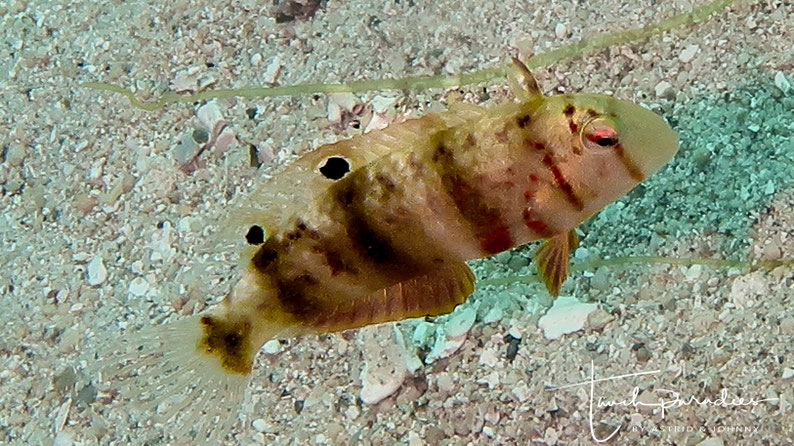
Maximum length: 24 cm
Depth: 10 - 90 m
The picture shows the fish in its juvenile form.
They have a large white spot on the side.
Males have a pale yellow spot in front of the white spot, females have a darker spot.
Juvenile fish have three dark bands on the body, which become smaller as they grow
and become one to three dark spots along the back.
Wrasses live in a harem, which is defended by a single large male.
Species of the genus Iniistius have strongly compressed bodies
and a steep forehead with a firm, knife-like front edge,
which allows them to easily dive into the sand when threatened.
They live on open, clean, sandy areas of lagoons and seashores
and dive into the sand to sleep safely at night or hide in case of danger.
Bangka island North Sulawesi
Iniistius pavo
Peacock wrasse or Blue razorfish

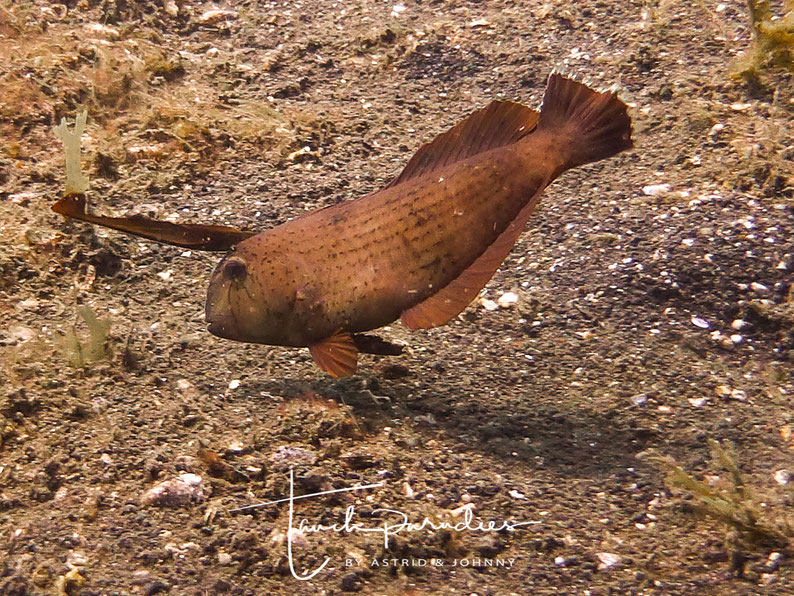
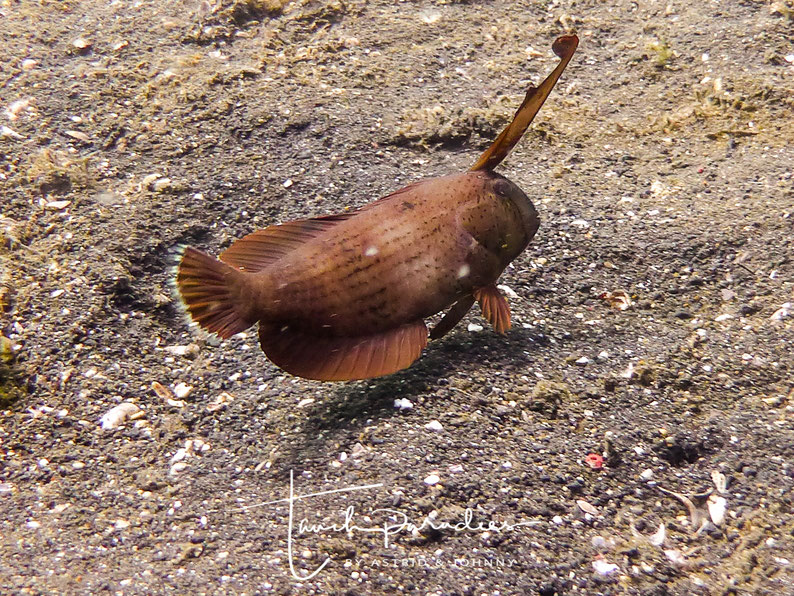
Maximum length: 40 cm adult.
Depth: 2 - 100 m
Juvenile: They imitate dead leaves with drifting and rocking swimming behaviour.
Found at shallow depths.
Mostly below 20 m, singly or in loose groups.
Eats crustaceans and shell snails, very shy, dives into sand at lightning speed.
Photo 1: Hurghada Egypt
Photos 2 - 3: Lembeh Strait North Sulawesi
Labroides bicolor
Bicolor cleanerfish, Bicolor(ed) cleaner wrasse, Cleaner wrasse,
Two-color cleaner wrasse or Yellow diesel
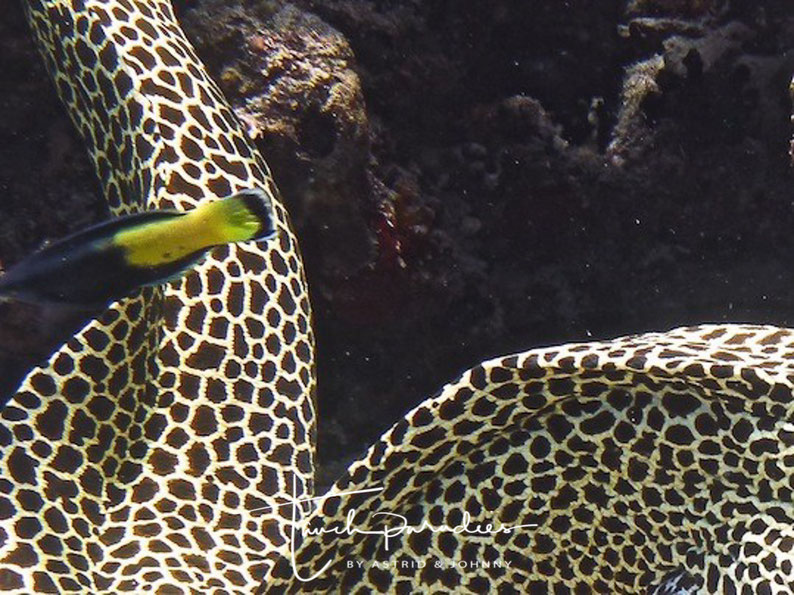
Maximum length: 14 cm
Depth: 1 - 40 m
Has cleaning stations in various habitats.
Photo 1: Embudu Maldives
Labroides dimidiatus
Bluestreak cleaner wrasse

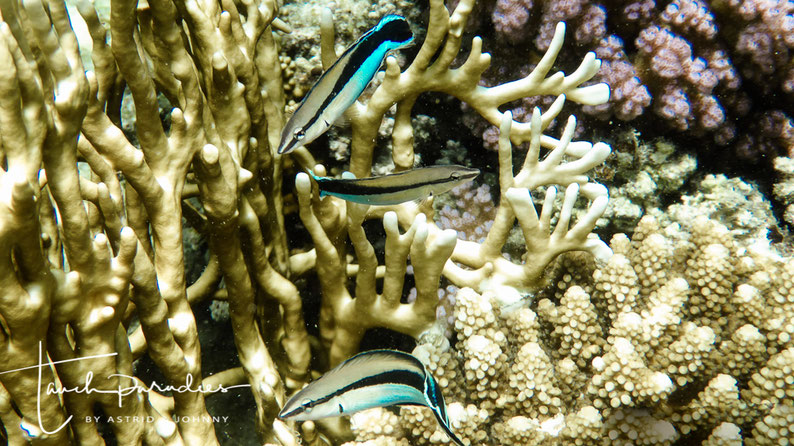
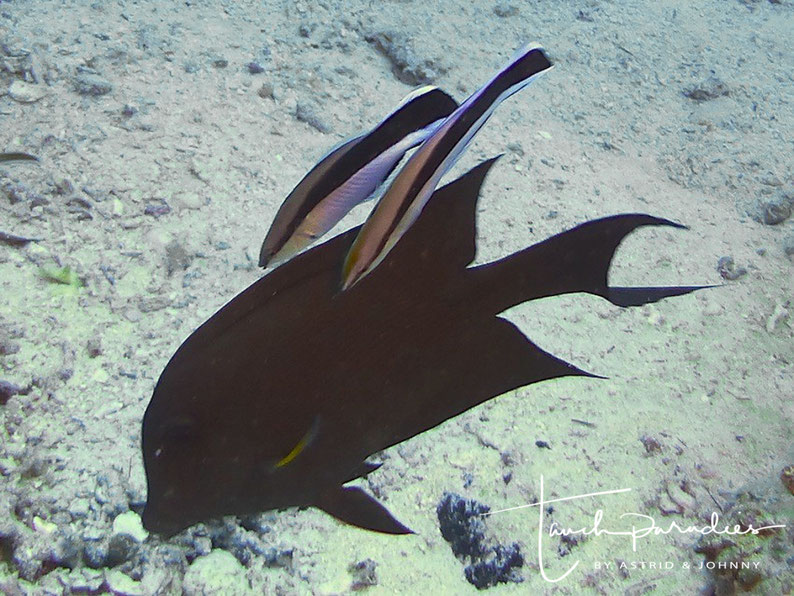
Maximum length: 12 cm
Depth: 1 - 40 m
Occupies cleaning stations on conspicuous coral formations.
Eats parasites, mucus and skin remnants when cleaning other fish.
El Qesir Egypt
Larabicus quadrilineatus
Four-line wrasse
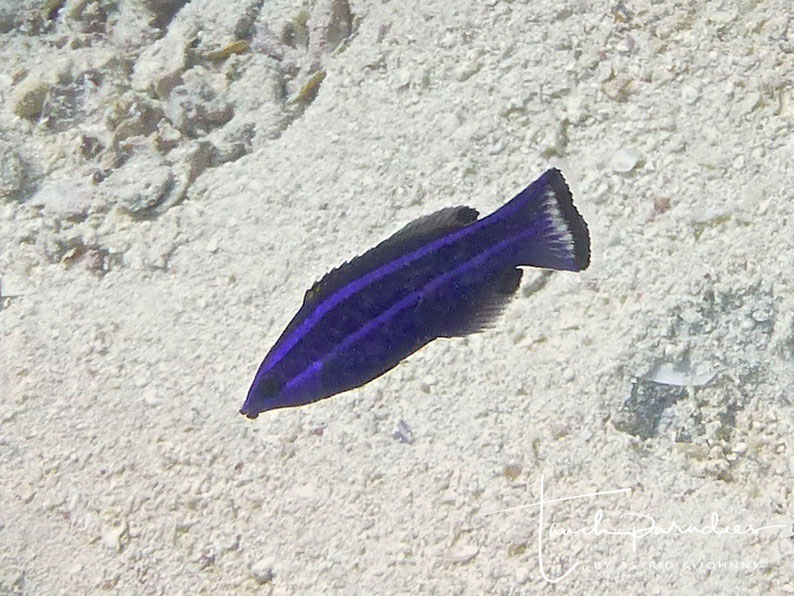
Maximum length: 11 cm
Depth: 0.5 - 22 m
On the photo is a juvenile, only these are cleaner fish until they are adults, after that no more.
They do not have a permanent home.
When they are adults, they feed on coral polyps.
Hurghada Egypt
Macropharyngodon ornatus
False leopard or Ornate leopard wrasse


Maximum length: 12 cm
Depth: 3 - 30 m
Juvenile: Head with a white base colour and net-like orange stripes.
Single or in small groups over coral, sand or rubble.
Photo 1: Bangka Island North - Sulawesi
Photo 2: Moalboal Philippines
Novaculichthys taeniourus
Rockmover wrasse, Carpet wrasse, Gragon wrasse, Bar-cheeked wrasse, Olive-Scribbled wrasse or Reindeer wrasse


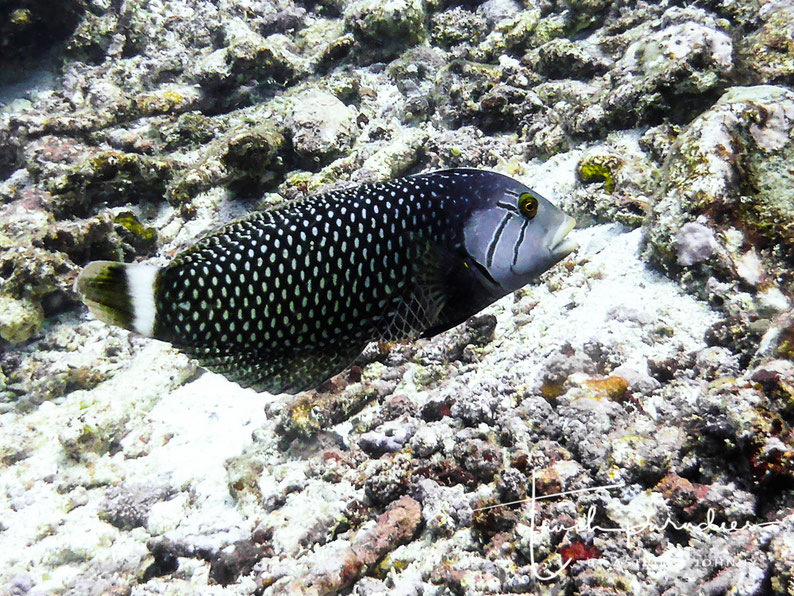

Maximum length: 30 cm
Depth: 2 - 45 m
In the first 2 pictures you can see the juvenile form of this fish.
They are brown with light speckles and imitate the colouring and swimming style of drifting tangs.
Adults can usually be seen individually near the reef, turning over rubble in search of food.
Photos 1 - 3: Lembeh Strait North Sulawesi
Photo 4: Bangka island North Sulawesi
Oxycheilinus digramma
Check-lined wrasse


Maximum length: 35 cm
Depth: 2 - 60 m
Their colour varies, either green with a reddish belly or light with a red longitudinal stripe.
Hunts small fish.
Swims over the bottom.
Curious.
Photo 1: Bangka island Nord Sulawesi
Photo 2: Hurghada Egypt
Oxycheilinus arenatus
Speckled maori wrasse
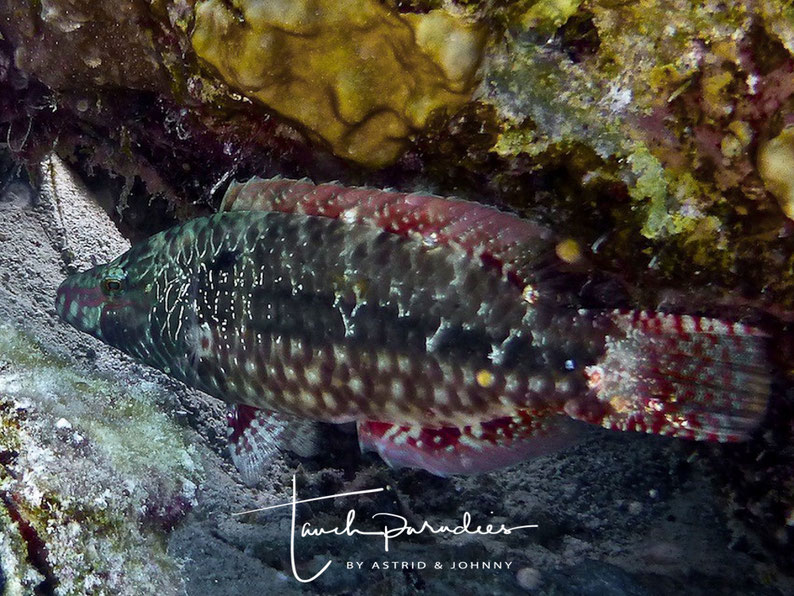
Maximum length: 24 cm
Depth: 1 - 25 m
White spot on the root of the tail and a brown lateral stripe.
Solitary, always swimming close to the bottom.
Curious and not very shy.
Hurghada Egypt
Oxycheilinus bimaculatus
Two-spot wrasse
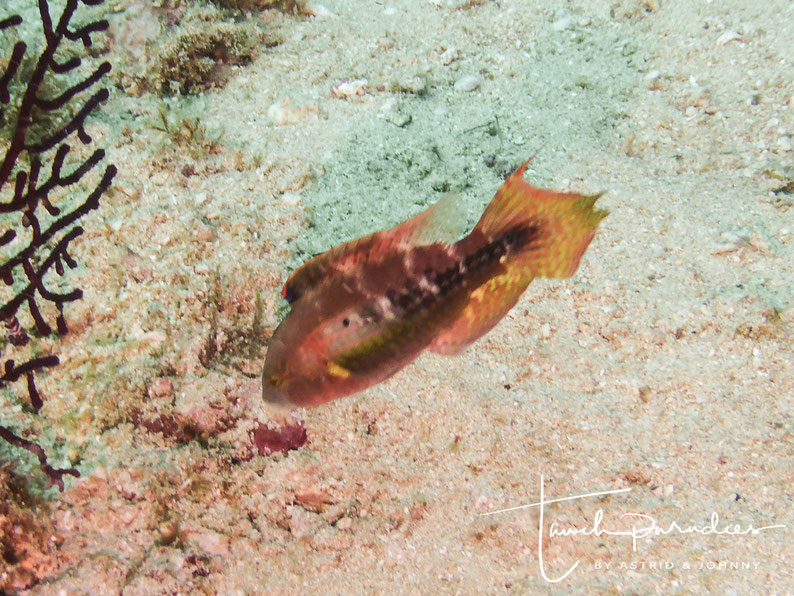
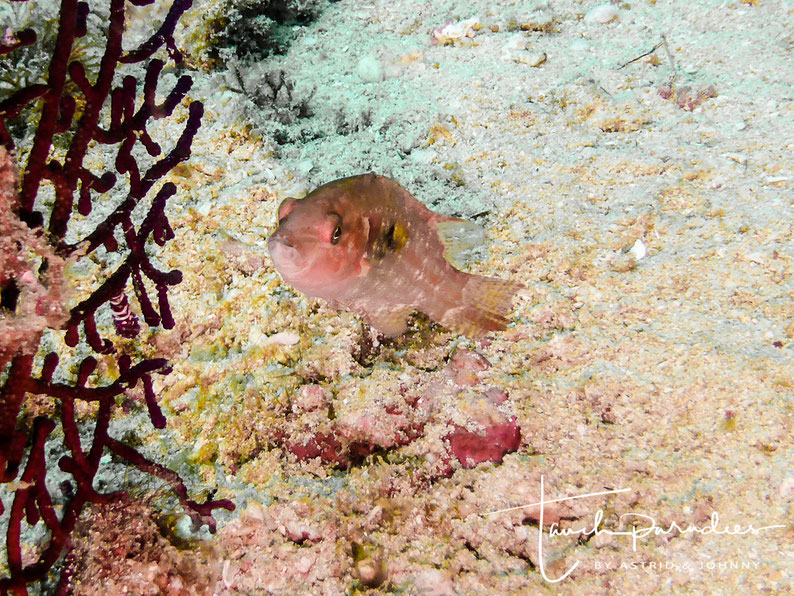
Maximum length: 15 cm
Depth: 1 - 18 m
Their colouring is very variable, from brown to yellow or green, with various other shades or spots.
Males develop long filaments on the caudal fin, reminiscent of a diamond.
Bangka Island North Sulawesi
Oxycheilinus celebicus
Celebes maori wrasse, Celebes Maoriwrasse, Celebes wrasse,
Eared maori wrasse, Slender maori
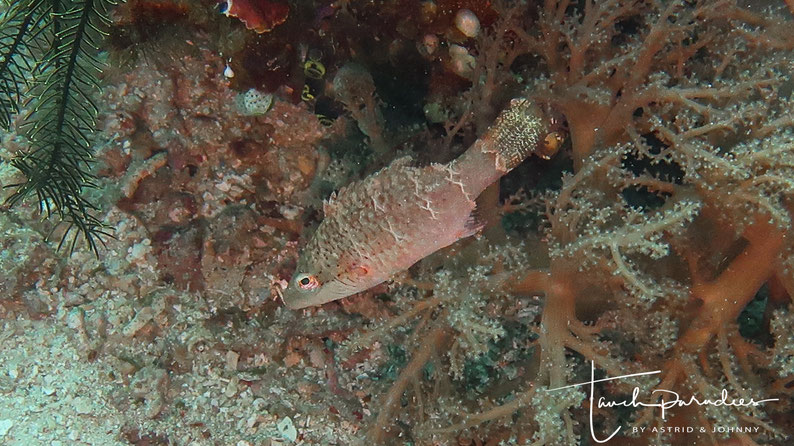
Maximum length: 22 - 25 cm
Depth: 3 - 40 m
Rarely encountered.
Found on coral-rich reefs in sheltered lagoons.
Feeds mainly on gastropods and various crustaceans.
Male: Reddish to brownish speckled, light spots on the body scales,
orange lines extending from the eyes,
small blue spot on the front of the dorsal fin
and a dark spot on the caudal peduncle.
Female: Densely speckled with light red and dark brown spots,
these spots are often square, interspersed with light bars on the central side,
forming a broad band that becomes darker towards the back.
Small white spot on the upper rear edge of the gill cover.
Juveniles: Black ocellus on the base of the caudal fin.
Bangka island North Sulawesi
Paracheilinus octotaenia
Red sea eightline flasher
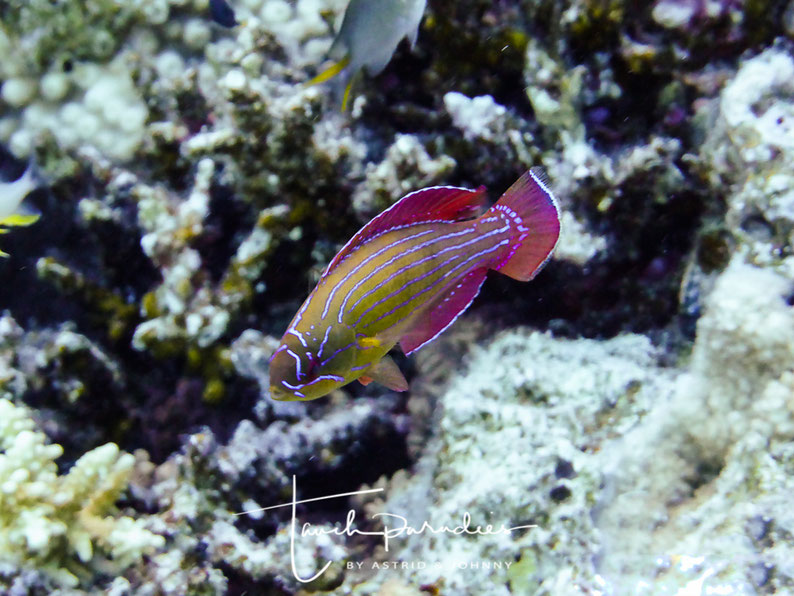
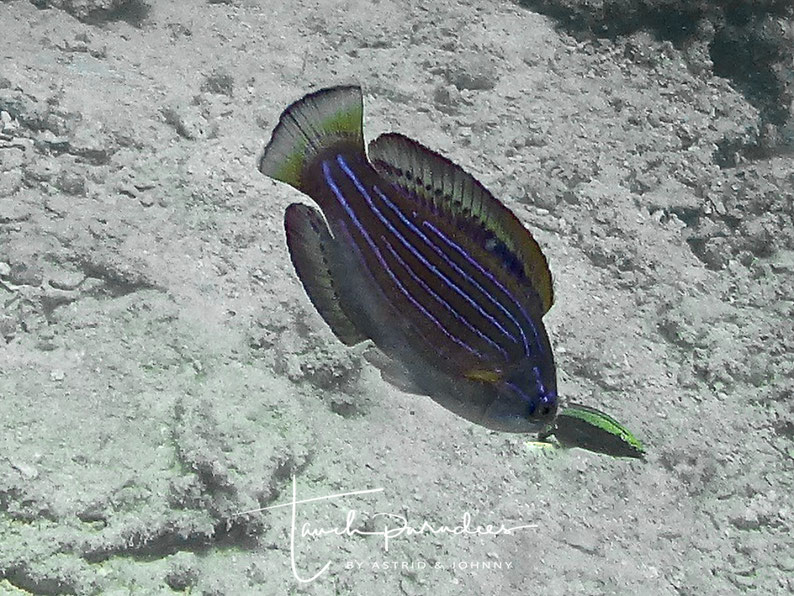
Maximum length: 9 cm
Depth: 5 - 30 metres
The male in the photo is in the process of mating, as his fins are raised.
They form harem groups of up to 12 females and several males.
Hunts for zooplankton in open water.
Hurghada Egypt
Pseudocheilinus hexataenia
Six-line wrasse
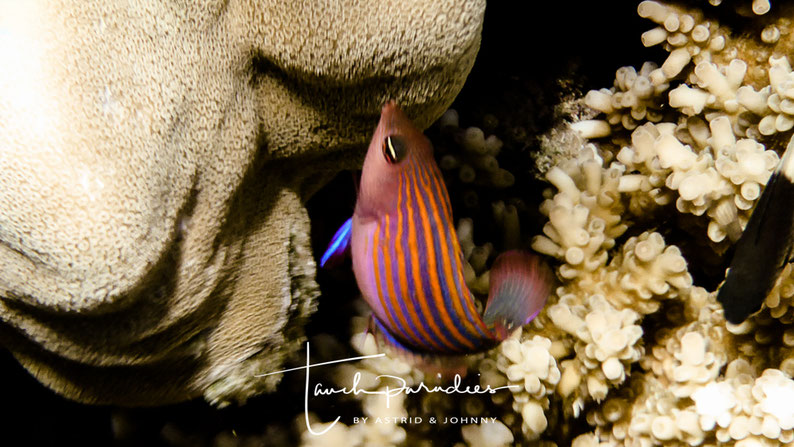
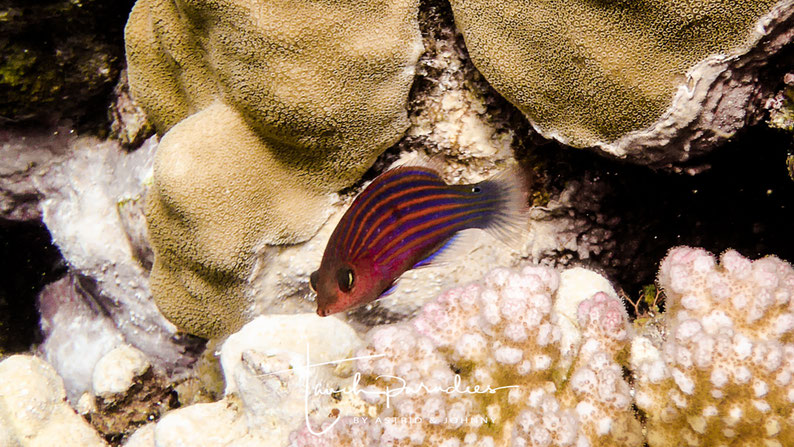
Maximum length: 8 cm
Depth: 2 - 35 m
Very difficult to photograph because it moves very quickly
and is always close to its hiding place.
The body is purple-red with yellow lines and a red eye with 2 lines.
Hurghada Egypt
Pseudodax moluccanus
Chiseltooth wrasse
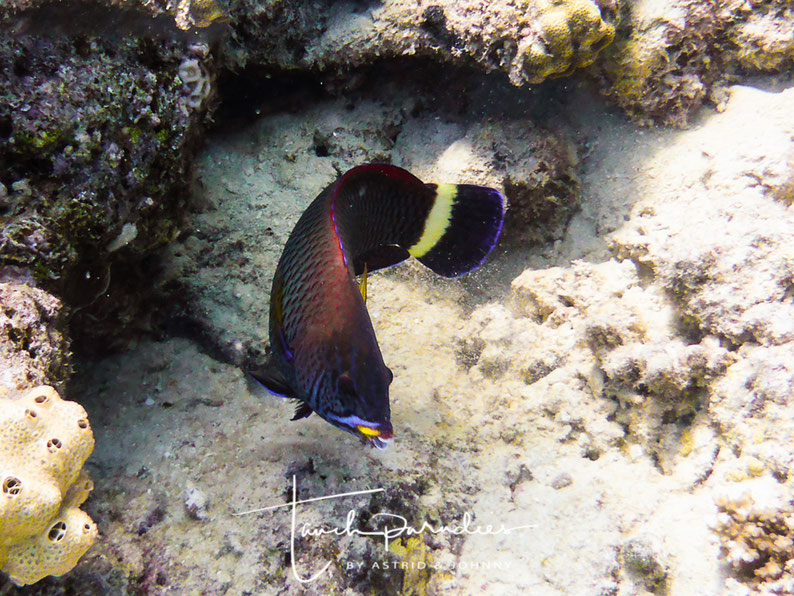
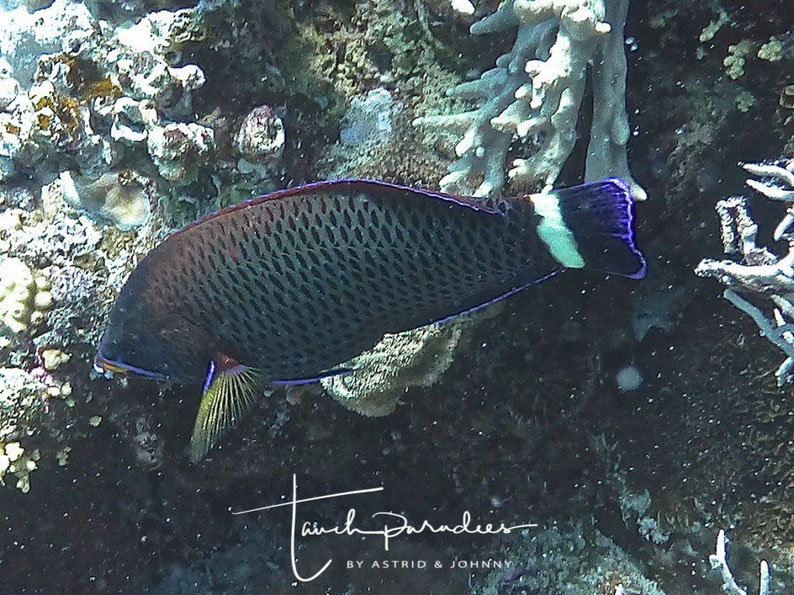
Maximum length: 25 cm
Depth: 2 - 40 m
Strong, chisel-like teeth that are perfect for cracking
and eating hard-shelled invertebrates.
It is a fast swimmer and always close to hiding places.
Hurghada Egypt
Pteragogus cryptus
Cryptic wrasse
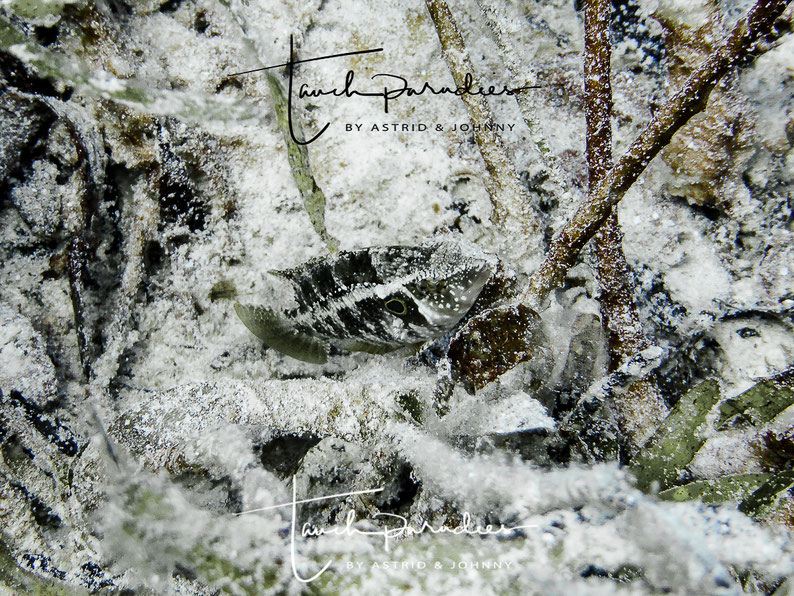
Maximum length: 9.5 cm
Depth: 1 - 20 m
Lives alone or in pairs, hidden, often overlooked.
Usually in the cover of soft corals, coral branches, sea grass or algae.
Hurghada Egypt
Pteragogus enneacanthus
Cockerel wrasse, Redstriped wrasse
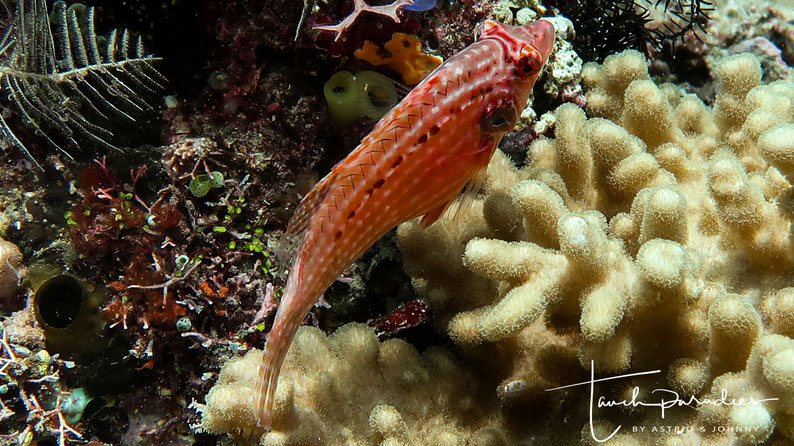
Maximum length: 15 cm
Depth: 5 - 18 m
It lives in various habitats from shallow reefs covered with algae
to deep offshore reefs, there on soft bottoms with sponges and algae hydroid colonies of the genus Aglaophenia.
Usually hides under dense weed zones or in small caves.
This shy fish rarely leaves its cover, and when it does,
only to take a quick look at its surroundings,
to see if everything is safe, because with its small 15cm it is a good snack for larger fish.
In Rudie.H.Kuiter's book “Labridae fishes: Wasses” they are shown in a wide variety of colors.
Its German name comes from the large eyespot diagonally above the pectoral fins.
Bangka island North Sulawesi
Pteragogus turdus
Cockerel wrasse, Redstripped wrasse

Maximum length: 15 cm
Depth: 8 - 18 m
Lives in various habitats from shallow reefs covered with algae
to deep offshore reefs, where it lives on soft bottoms
with sponges and algae hydroid colonies of the genus Aglaophenia
Mysterious species that usually hides under dense weed zones or in small caves.
or in small caves.
Only rarely does it leave its hiding place to take a quick look at its surroundings,
whether everything is safe, as it avoids larger fish,
which are only too happy to regard it as welcome food.
Lembeh Strait North Sulawesi